Most people researching microneedling have heard of RF. Almost nobody’s heard of the plasma version — yet. It’s only just arrived in Canada, and Gia Sena is among the first clinics offering it.
If you’ve been looking into microneedling, you’ve probably already run into RF microneedling. But RF isn’t the only way to add energy to microneedling. Plasma energy is another. There’s a real reason you likely haven’t heard of it: Plexr Lumen, the plasma-energy microneedling option for Plexr, only arrived in Canada this past summer, and Gia Sena is among the first clinics in the country offering it. Here’s how the two compare — the energy they use, the depths they work at, and where each may fit.
What Each One Actually Does
RF microneedling sends a high-frequency electrical current through needle electrodes in the skin. As that current passes through the tissue, the tissue’s natural resistance — or impedance — converts the electrical energy into heat. That creates controlled zones of thermal injury around the needles, adding a thermal stimulus to the mechanical micro-injury of microneedling. Depending on the device and needle depth, that energy can be delivered at different depths within the skin, which is what gives RF its deeper structural reach.
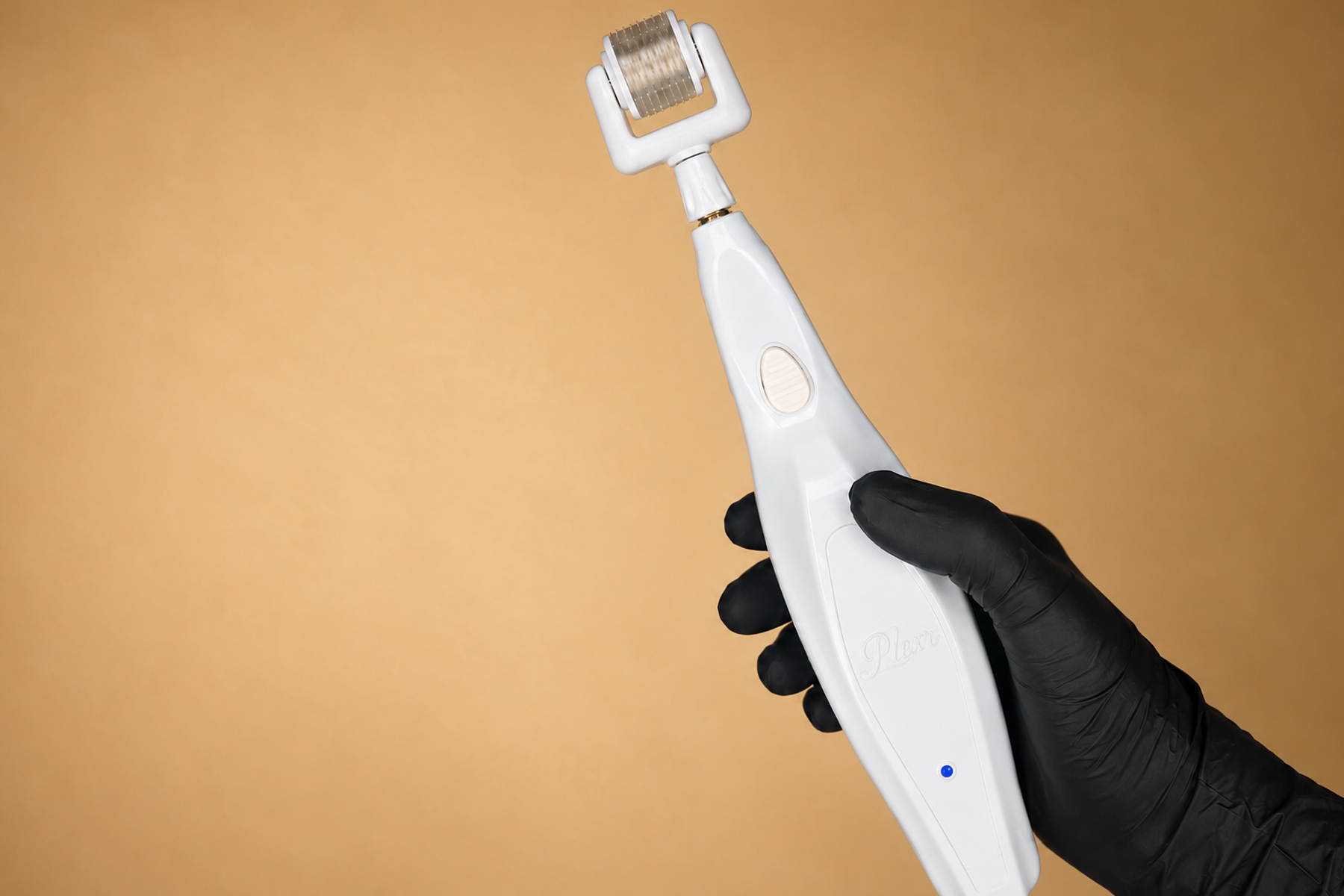
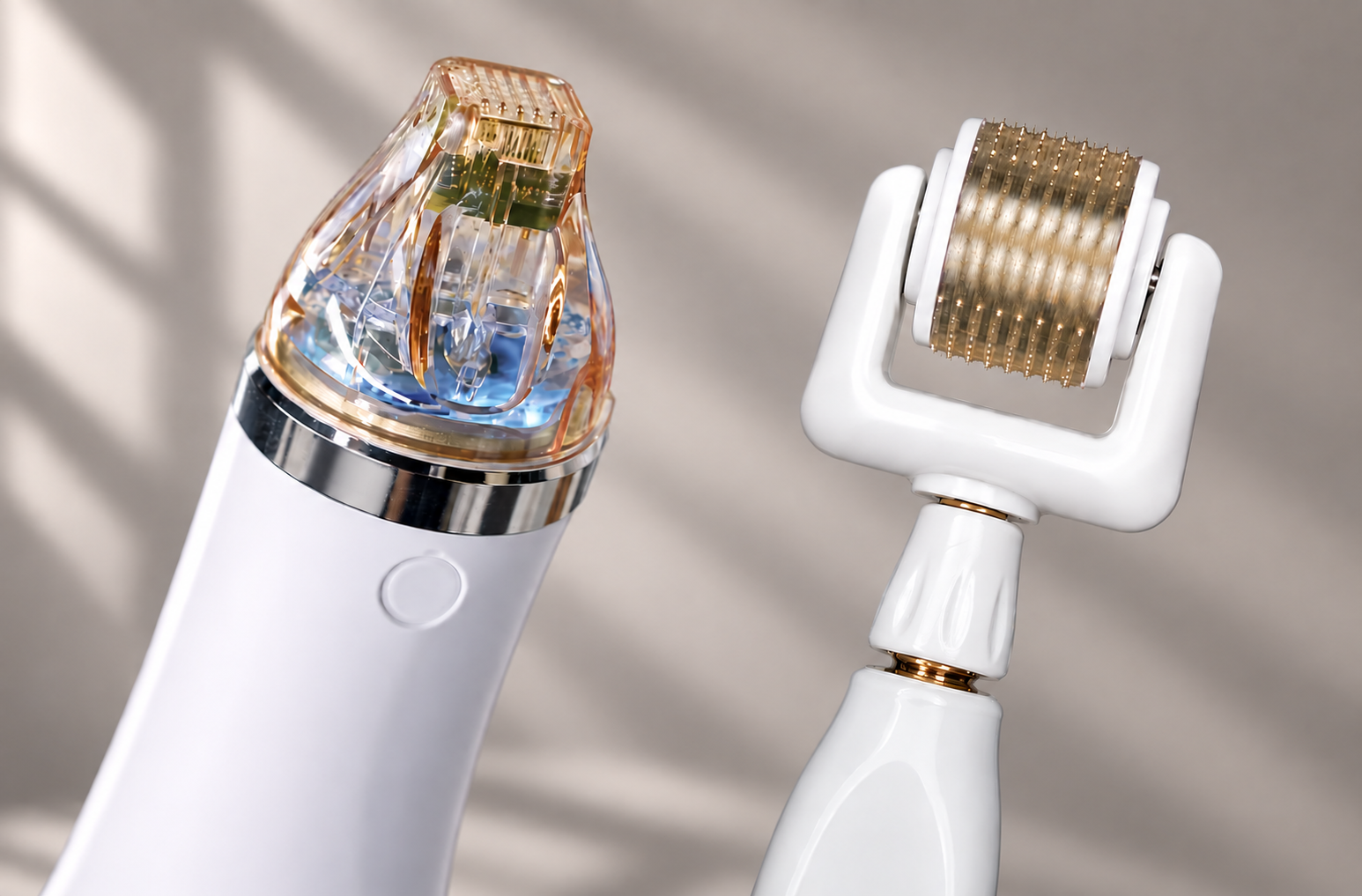
Plexr Lumen starts from that same needling foundation, but uses plasma energy instead of radiofrequency. The Lumen roller uses gold-coated stainless-steel needles, available in 0.25 mm, 0.5 mm and 1.0 mm depths, with plasma energy delivered through the microneedling attachment during the same pass. Plasma is an ionized state of matter that carries thermal energy, so Lumen adds a thermal stimulus to the mechanical micro-injury too — but through a different energy source and at more superficial treatment depths. This isn’t the blood-derived plasma you may know from PRP microneedling. It’s generated entirely by the device itself; nothing about it comes from your own blood.
The real difference comes down to depth and focus, not which energy “wins.” RF microneedling as a category is generally built for deeper work, which is often why it’s the option people reach for once collagen loss tied to perimenopause has progressed into more noticeable sagging. Lumen is designed to work at more superficial microneedling depths — a good fit for texture, fine lines and mild-to-moderate laxity, the kinds of changes that often start showing up in your 40s and 50s before deeper structural concerns become more pronounced.
Side-by-Side: RF Microneedling vs. Plexr Lumen
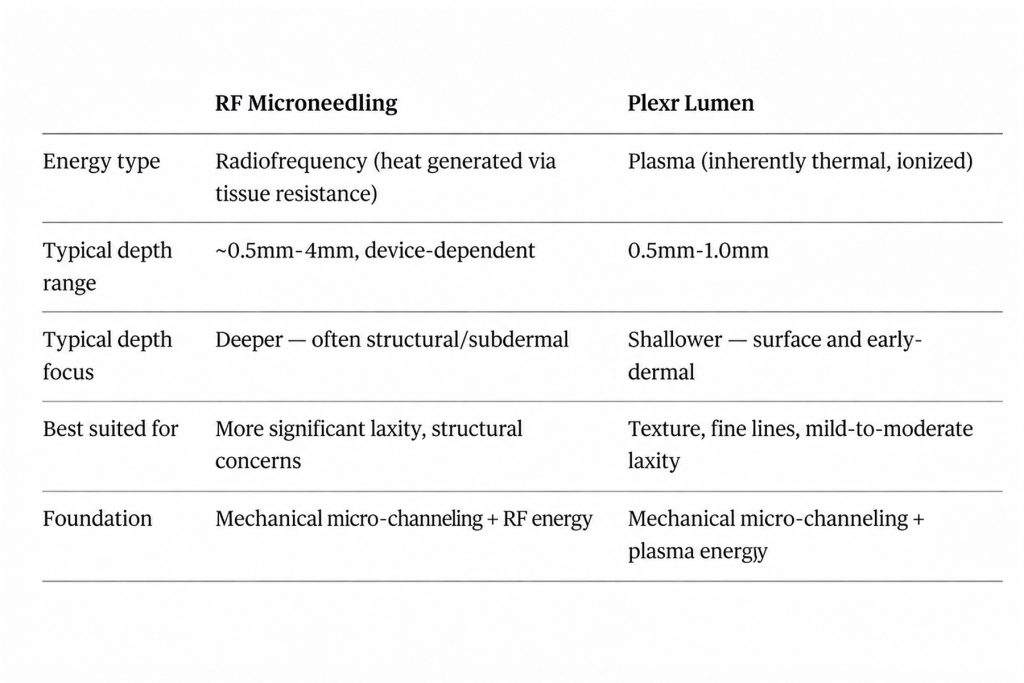
Neither one is the “better” choice — they’re just built for different depths and different starting points. It helps to think about where your own skin is at: as estrogen declines, collagen production slows and skin loses some of the support that once kept it firm, which is often when laxity — along with changes in texture and fine lines — starts showing up. Lumen’s treatment depths are well suited to mild-to-moderate changes, including laxity. RF reaches deeper, which may make it more relevant as structural changes become more pronounced. There’s overlap between the two, so the better fit really comes down to your skin and what you want to address.
CLINICAL INSIGHT —
Energy microneedling can feel different from traditional microneedling because you’re adding an energy component to the mechanical needling. Thorough topical numbing is standard before every Plexr Lumen treatment at Gia Sena — the goal is to make the treatment as comfortable as possible.
FAQs
Q&A: What's the difference between energy microneedling and regular microneedling?
Regular (traditional) microneedling relies on the needles alone. Energy microneedling adds a second stimulus during the same pass — most often radiofrequency, or in Plexr Lumen’s case, plasma energy.
Q&A: Is RF microneedling the same as Plexr Lumen?
No. They use different types of energy, delivered in different ways, even though both start from the same needling foundation.
Q&A: Which is better, RF microneedling or plasma energy microneedling?
Neither is better across the board. They overlap in what they can treat, but work at different depths and use different energy. Which makes more sense depends on your skin and what you want to address.
Q&A: I've already tried RF microneedling. Is there any point trying something else?
Possibly. RF and plasma energy work differently, so the better question is why RF didn’t give you what you wanted and whether a different treatment depth or mechanism makes sense for your skin.
Q&A: Is Plexr Lumen new?
Yes — the plasma-energy microneedling option for the Plexr device only recently arrived in Canada, and Gia Sena is among the first clinics in the country offering it. That’s a big part of why you might not have come across it yet.
For me, Plexr Lumen is exciting because it gives me another way to work with the skin in front of me. It won’t be the right treatment for everyone — no treatment is — but I’m very happy to have it in the toolbox. If you’re curious about whether it makes sense for your skin, we can talk about it.
Sarah is a Registered Nurse and founder of Gia Sena, providing regenerative plasma energy aesthetics in Calgary. With over 23 years in nursing, her work focuses on supporting long-term skin vitality through regenerative treatments tailored to perimenopausal and menopausal skin.
Sources:
- GMV Medical Innovation. Plexr Lumen: The System. Manufacturer product brochure.
- GMV Medical Innovation. Plexr Lumen Webinar Presentation. November 2025. Manufacturer technical and treatment information.
- Alexiades M. Radiofrequency microneedling. Facial Plast Surg Clin North Am. 2023;31(4):495–502. doi:10.1016/j.fsc.2023.06.010.
- A Comparative Analysis of Electric and Radiofrequency Microneedling Devices on the Market. J Drugs Dermatol.
- Chang ALS, Chung C. Menopause and the skin: old favorites and new innovations in cosmeceuticals for estrogen-deficient skin. PubMed PMID: 33242128.
Book your Consultation
This is where we tailor it, for you.