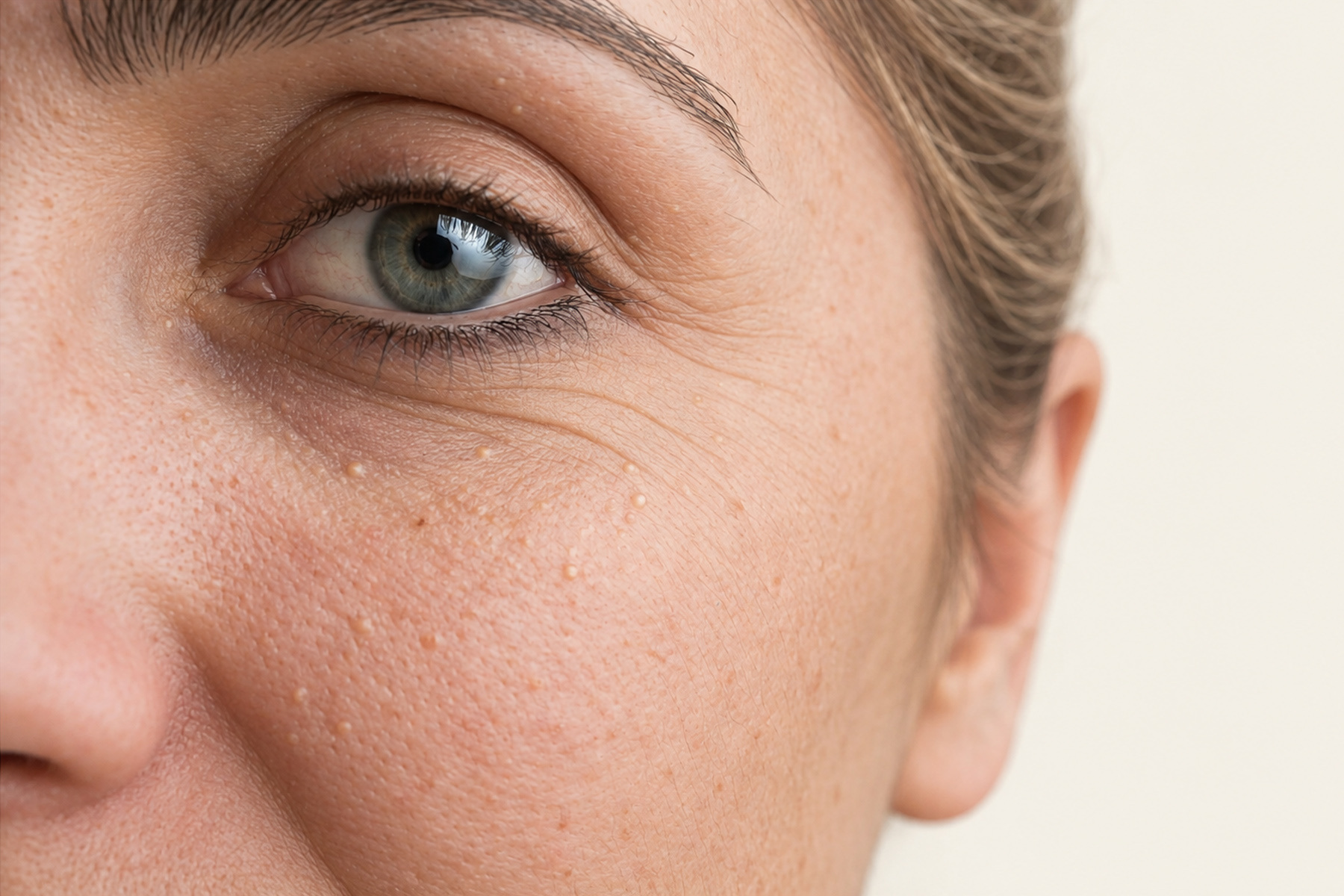
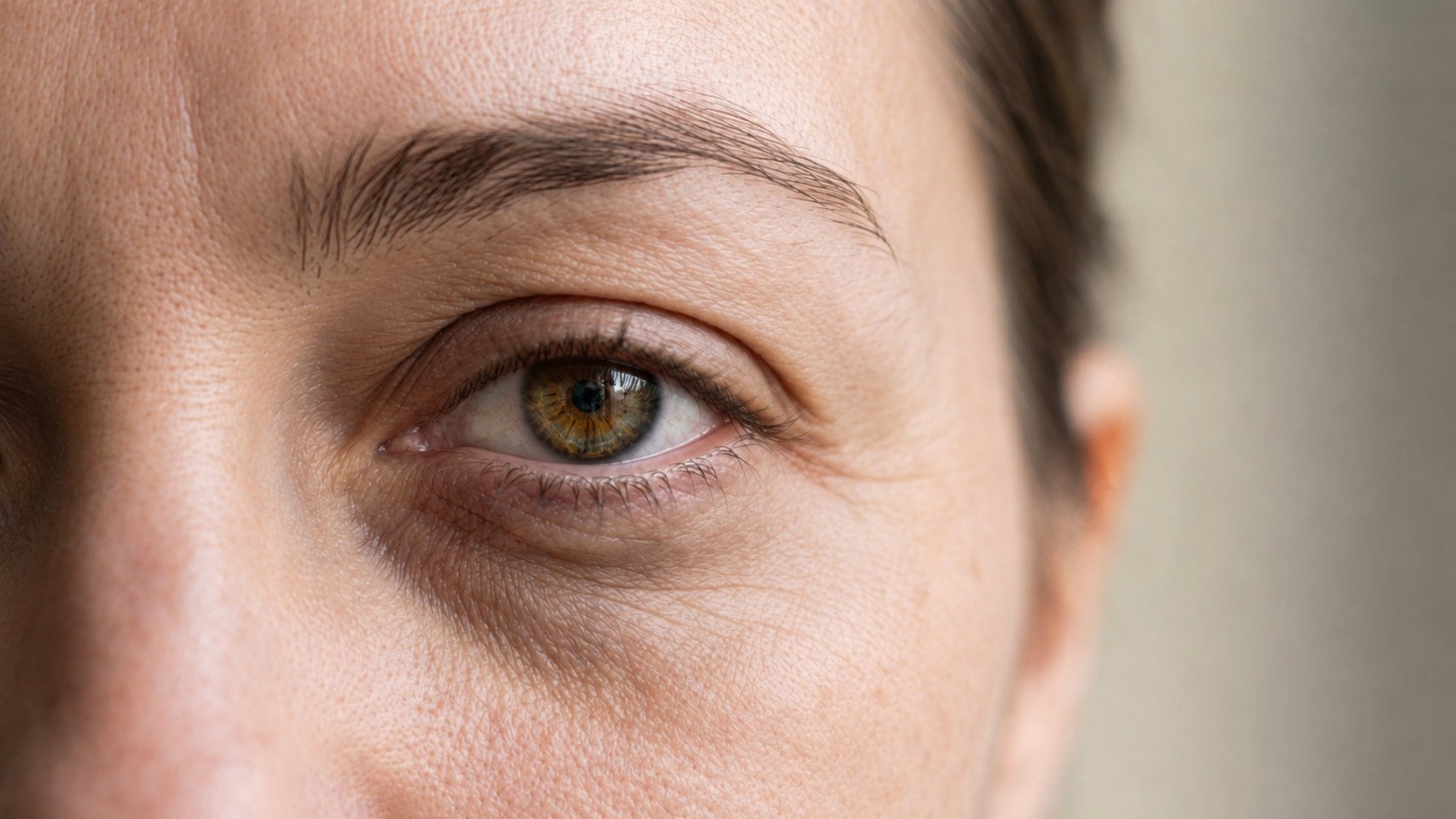
Your neck can wrinkle and lose firmness faster than your face — here’s the biology behind it, and how neck wrinkle treatment with Plexr and NeoGen can genuinely help in Calgary.
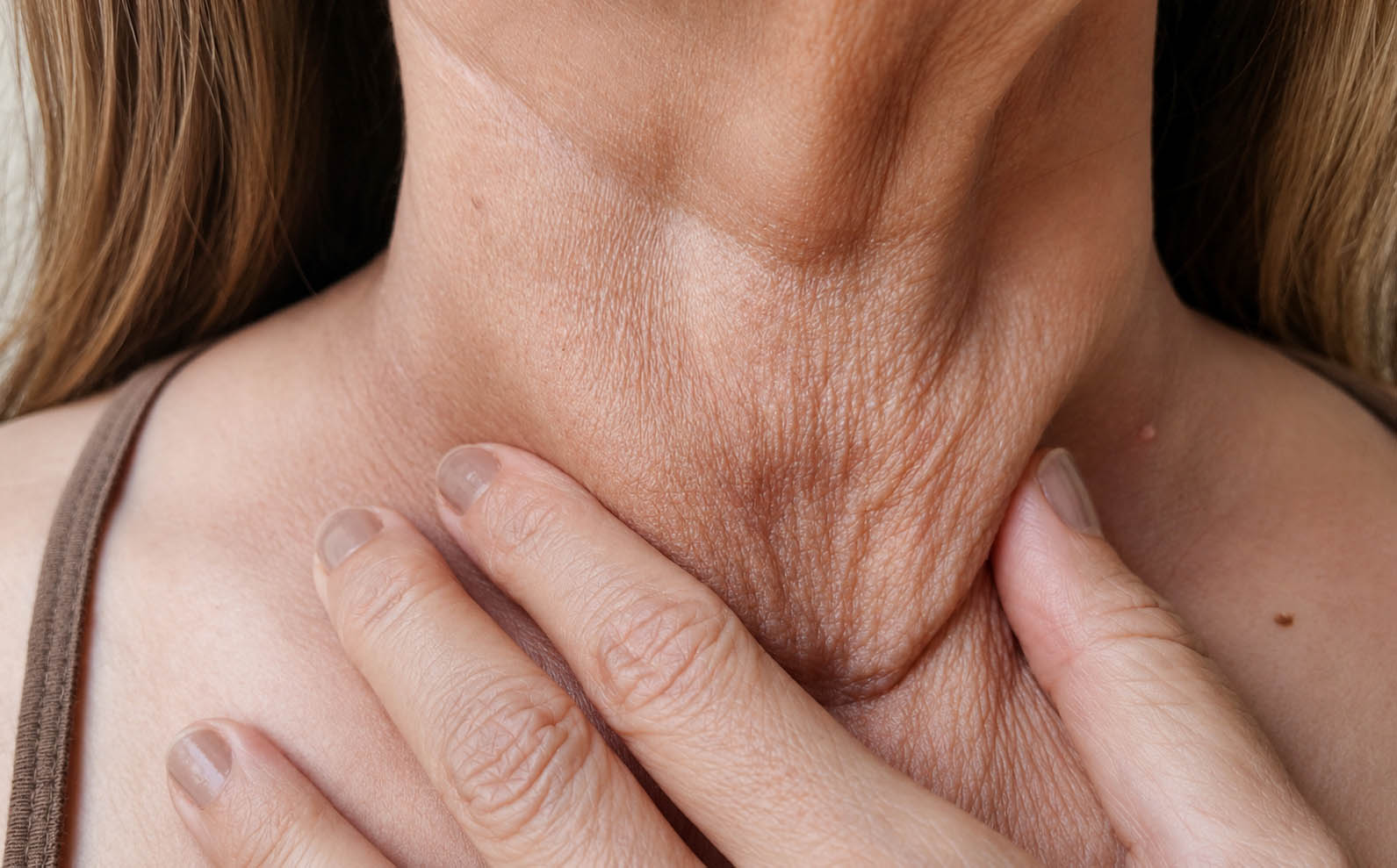
In practice, it is pretty common that the neck is where clients first notice early signs of aging. The neck ages faster than the face because it has thinner skin, fewer oil glands, and less structural support beneath it — and it can be neglected more often in daily skincare routines, where sunscreen and treatment products regularly stop at the jawline. It’s one of the most common concerns we see in Calgary clients who’ve been seeing shifts in their skin — it’s right up there with inquiries about eyelid hooding and heaviness too.
The Structural Reasons the Neck Ages Faster
Neck skin is thinner than facial skin, roughly comparable in thickness to eyelid skin, and contains far fewer oil-producing (sebaceous) glands. It also lacks the dense retaining ligaments that help anchor facial skin to underlying muscle and bone, and its main muscle, the platysma, is a thin, flat sheet rather than a bulky, supportive one — leaving the neck with less natural resistance to gravity and less capacity to bounce back after injury or surgery.
The neck also carries its own mechanical burden: it’s the most mobile region of the spine, constantly working against gravity to support the weight of the head, and modern habits like prolonged phone and laptop use — often called “tech neck” — add repetitive folding on top of that existing strain.
That same platysma also loses tone with age and can separate along its edges, which is the actual mechanism behind the vertical banding some women notice under the chin.
This combination means the neck has less natural resilience against sun exposure, gravity, and the gradual collagen decline that accelerates during perimenopause and menopause specifically. And it shows the effects sooner and more visibly than the face does. This isn’t unique to any one person’s skin. It’s a structural reality of how skin on the neck is built, and is why so many women notice their neck “giving away their age” well before they see the subtle changes on their face.
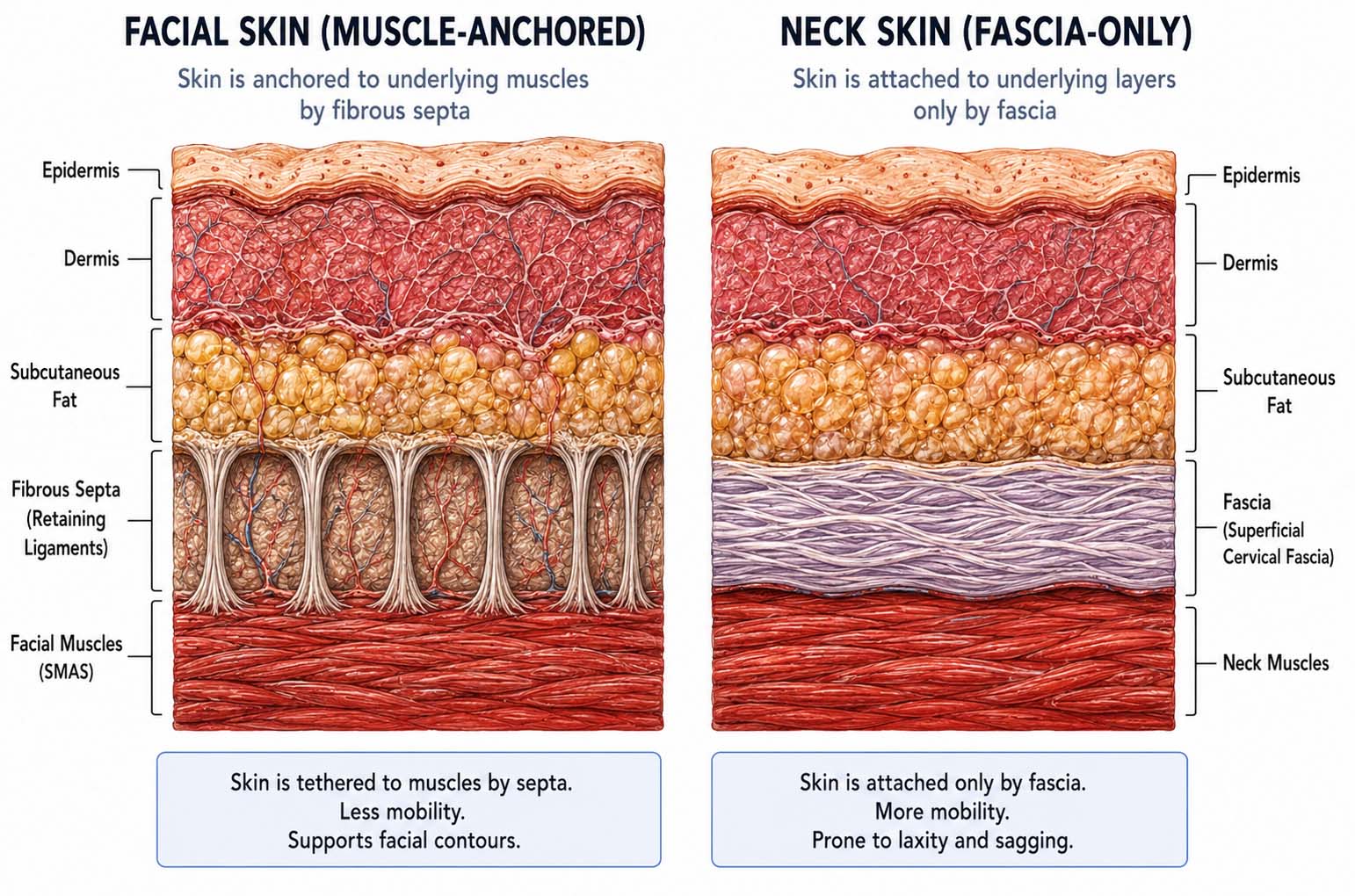
Facial skin is anchored by retaining ligaments; neck skin lacks this same structural support.
Why the Neck Has Historically Been Harder to Treat Well
Because the neck has far fewer oil glands than the face, it also heals more slowly and less predictably after resurfacing-style treatments — research on plasma technology has specifically noted this as a reason non-facial skin, including the neck, was historically approached more cautiously than facial skin with more aggressive laser resurfacing. This is part of why neck aging has been an underserved area in aesthetic treatment generally, and why it deserves its own approach rather than simply extending whatever works on the face.
Q&A: Does the Neck Really Age Faster, or Does It Just Show More?
Both. The neck shows sun damage and collagen loss more visibly because it has thinner skin and less structural support, but it’s also genuinely aging faster at a cellular level, given how much less protective architecture it has compared to facial skin.
How Plexr and NeoGen Approach Neck Skin Laxity & Lines
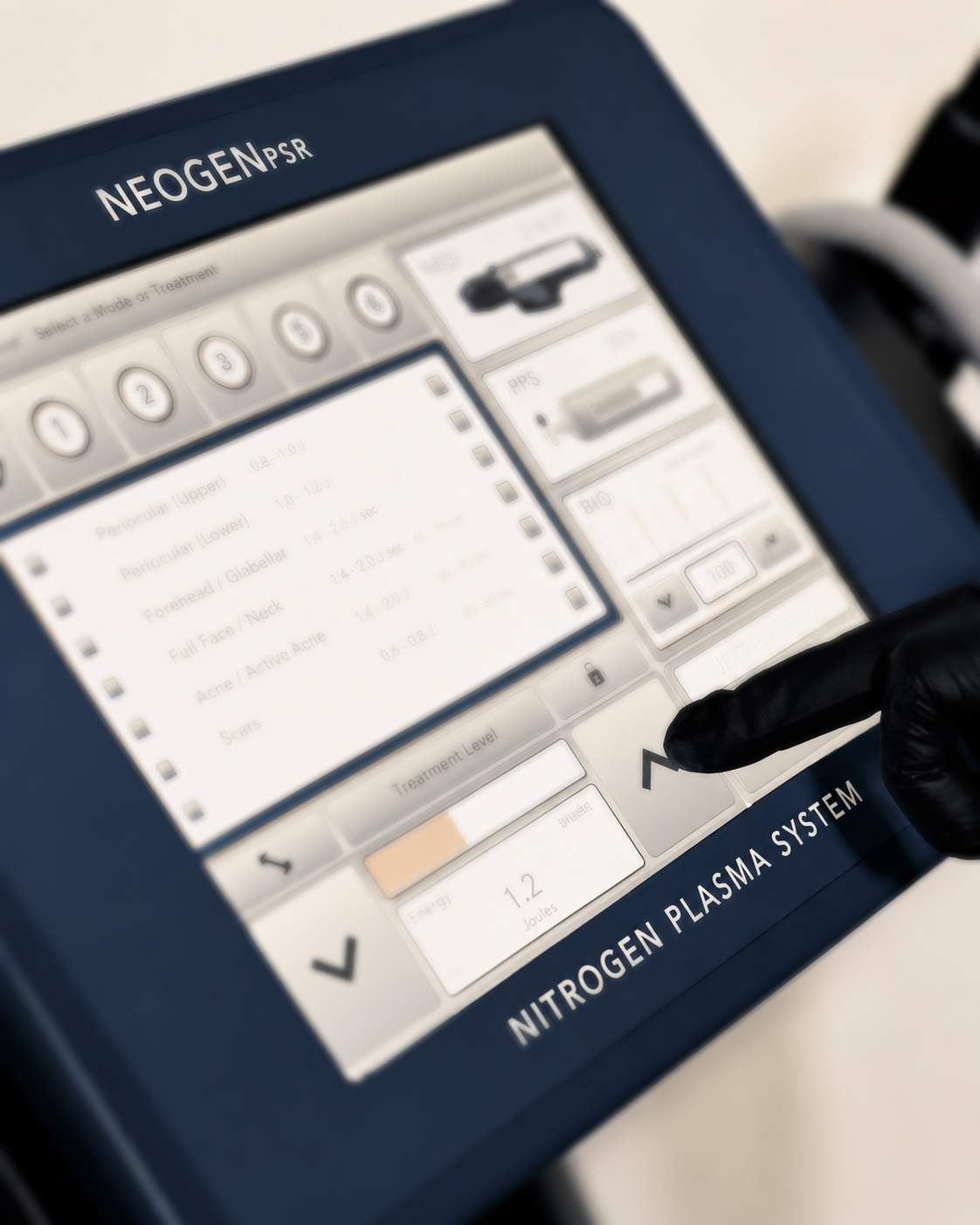
Plexr and NeoGen both have a role on the neck — they’re different approaches, not one better than the other. Plexr works at the skin’s surface and can be used to tighten loose, superficial skin, soften wrinkles, and treat the lines that form along platysma banding, though treating an area as large as the neck this way is generally a longer procedure than treating a smaller area like the eyelids. NeoGen works across both surface and deeper dermal tissue, which tends to suit broader, overall changes in skin quality and laxity across the whole neck. Learn more about NeoGen PSR here.
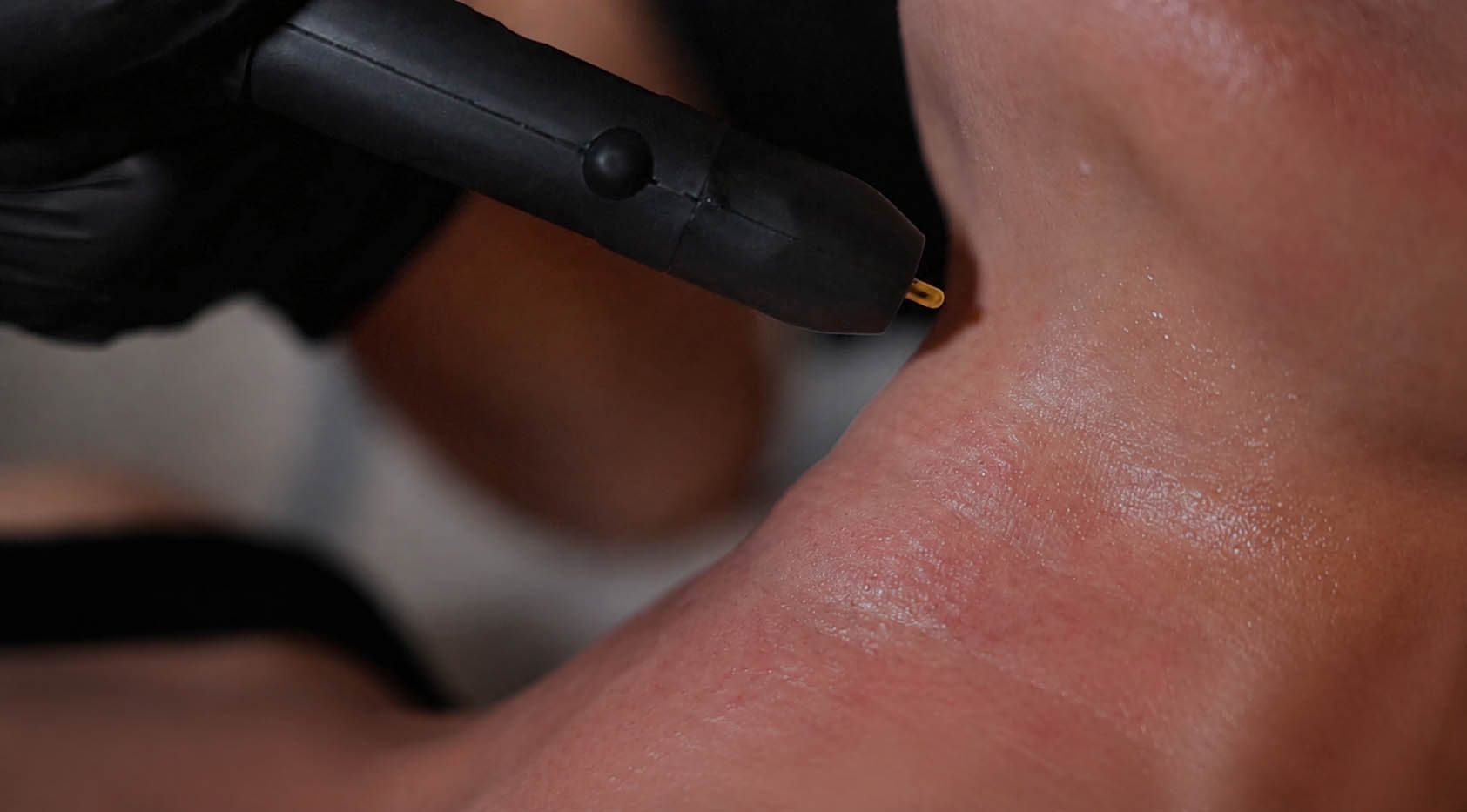
NeoGen’s adjustable energy levels allow the treatment to be calibrated for the neck specifically.
NeoGen treatment is typically approached at one of two levels. A higher energy treatment is more intensive, designed to initiate deeper tissue regeneration, and is often recommended for clients with more advanced skin changes or those who haven’t previously undergone collagen-stimulating treatment. A lower energy series takes a more progressive approach, using a series of lower-energy treatments to build collagen gradually over time — ideal for maintaining skin quality or creating cumulative improvement with less intensity per session. Many treatment plans combine both approaches, using higher and lower energy sessions together to build and support long-term results. For a full day-by-day look at what recovery involves, our Recovery Guide covers healing for both Plexr and NeoGen in detail.
Published research on plasma skin regeneration technology (Alster & Konda, Dermatologic Surgery, 2007) studied the neck alongside the chest and hands using the Portrait PSR system, the earlier plasma resurfacing platform that NeoGen’s underlying technology descends from — not a study of the NeoGen device by name. That research found average clinical improvement of 41% in the neck after a single treatment, with significant reductions in wrinkle severity and hyperpigmentation, and no scarring or hypopigmentation observed in any treated area. That same research points to part of why the neck has historically been harder to treat with more aggressive laser technology in the first place: the area simply has fewer oil-producing glands to support rapid re-healing, compared to facial skin.
Which approach makes more sense depends on what’s actually going on — isolated wrinkles or banding lines may be well suited to Plexr, while more widespread crepiness, laxity, or pigmentation across the neck often points toward NeoGen. Sometimes clients choose both treatments spaced over the course of a few months.
What This Treats
- Horizontal neck lines and “necklace lines”
- Crepey or loose-feeling neck texture
- Sun damage and uneven pigmentation on the neck
- General loss of firmness across the neckline
Many of the same concerns show up on the décolleté, and both treatments can be extended there as part of the same visit.
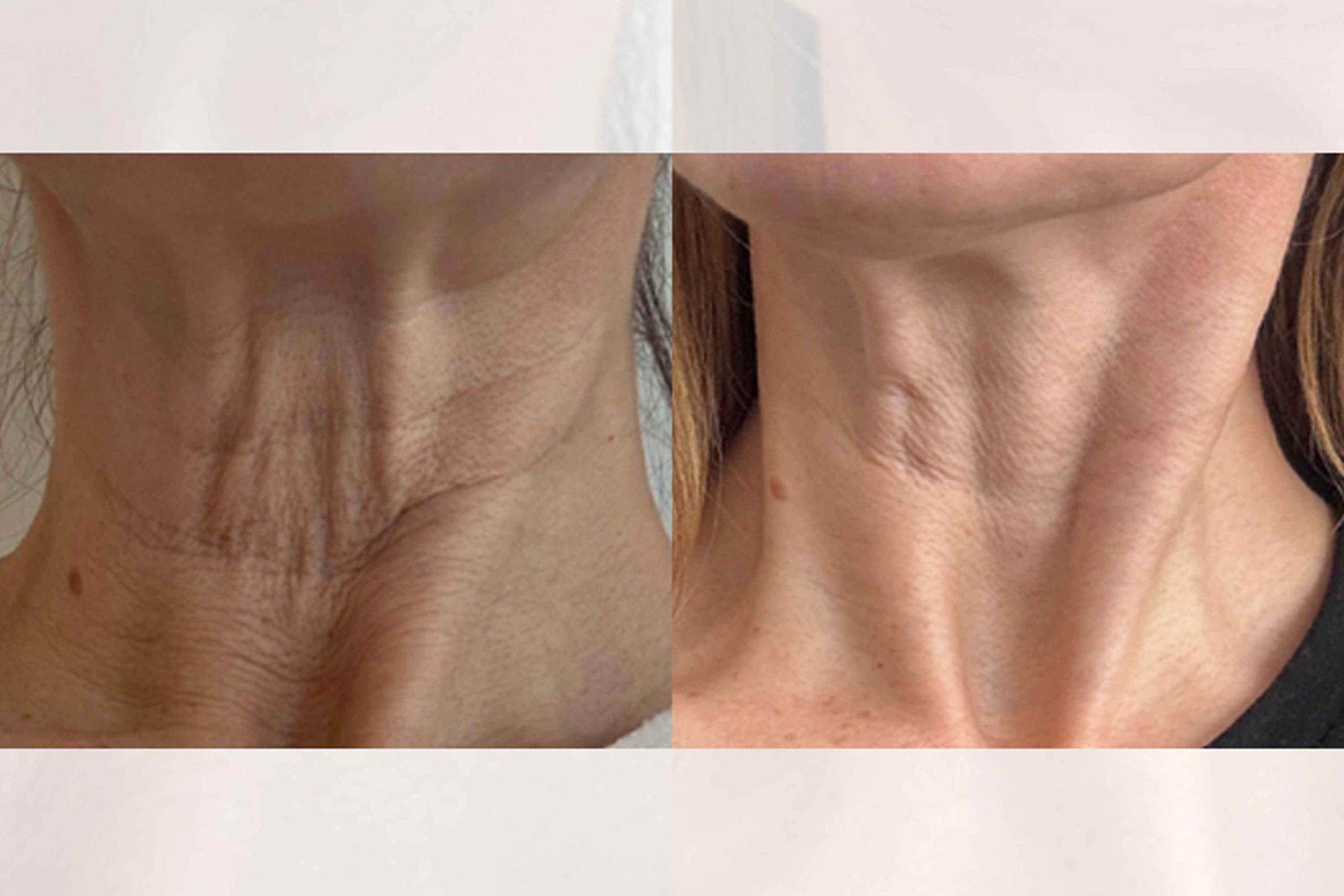
NeoGen treatment for neck skin laxity. One lower energy and one higher energy treatment. Clinical image provided by Plasmatology and used with permission.
Q&A: Will This Treat Vertical Neck Bands Too?
Vertical banding under the chin usually comes from the platysma muscle losing tone, not just skin laxity. Plexr works primarily at the skin’s surface, while NeoGen works through both the surface and deeper dermal tissue — while they do not treat platysma bands directly, they can tighten and improve the lines and crepiness sitting over the entire neck area. This complements — and can be used alongside — Botox (or other neuromodulators) for platysmal banding.
What Treatment Actually Looks Like
- Consultation and assessment — the neck can be assessed separately from the face, based on the client’s specific goals.
- Treatment — energy levels are set specifically for the neck’s thinner skin and fewer oil glands.
- Healing phase — a recovery window generally similar to facial healing (7-10 days).
- Gradual collagen remodeling — new collagen continues forming over the following months, refining tightness, firmness, and texture further.
Q&A: Is Downtime on the Neck Longer Than on the Face?
In practice, healing on the neck is pretty much the same as facial healing, and falls within the same overall timeframe. Some clients do have more sensitive skin on the neck, so energy levels and aftercare may be adjusted individually — but downtime itself isn’t meaningfully longer than what’s typical after a facial or other body area treatment.
Results and Timeline
Initial healing looks a little different depending on which treatment is used. Plexr produces small carbon crusts that protect the skin while it regenerates underneath, whereas NeoGen keeps the outer layer of skin intact, so recovery looks and feels more like a sunburn — redness, warmth, and eventual bronzing and peeling as the skin renews from within. For a full day-by-day breakdown of what each looks like, our Recovery Guide walks through healing for both treatments in detail.
Plexr and NeoGen also build longer-term results in slightly different patterns. With Plexr, there’s visible tightening right away as the skin contracts during the initial healing phase, with collagen continuing to develop and remodel in the weeks and months that follow. Some clients reach their goals with a single Plexr session; others, depending on the degree of laxity, do better with a series of treatments spaced over time.
NeoGen is a longer-term, regenerative treatment. While a 30, 60, and 90 day framework gives a general shape to expect, most clients notice the clearest shift closer to the 90 day mark, with results continuing to build in the months that follow. Age plays a role here too — skin in the 40s tends to show change a little earlier within that window, while skin in the 50s and beyond typically takes a bit longer, though it still begins within that three-month mark and keeps progressing from there. Collagen formation can continue for up to 24 months.
This age-based difference often tracks with perimenopause and menopause, when declining estrogen accelerates collagen loss.
Published research on this specific technology, studying the neck alongside the chest and hands, similarly found measurable improvement in wrinkle severity and pigmentation as early as the one-month mark, with continued improvement through three months — consistent with the gradual, longer-term pattern seen in practice. Treatment plans for the neck are often built around a combination of higher and lower energy sessions rather than a single visit, to support these long-term results.
Who This Is For
If you’ve searched anything like “loose neck skin,” “neck wrinkles treatment,” or “how to get rid of neck wrinkles,” this is likely a good fit for you.
- Horizontal lines or “necklace lines” across the neck
- A neck that looks noticeably older than the rest of the face
- Crepey texture or looseness that skincare alone hasn’t addressed
- Sun damage or uneven pigmentation specific to the neck area
- You currently get Botox for platysmal bands and are curious about other options

Every treatment plan starts with an assessment and explanation of the treatment, and time to have your questions answered.
Managing Expectations
Results develop both immediately and progressively, with visible improvement continuing as new collagen forms over the following months. Treatment plans for the neck are often built around a combination of higher and lower energy sessions rather than a single visit, to support long-term results. Following an individualized aftercare plan and attending follow-up appointments matters here as much as anywhere else in the body. Individual results vary.
Frequently Asked Questions
Is it normal for the neck to age faster than the face? Yes. Neck skin has fewer oil glands, is thinner, and lacks the dense retaining ligaments that anchor facial skin to underlying muscle and bone, which means it shows aging sooner and more visibly.
Can NeoGen be used on the neck safely? Yes, at adjusted energy levels calibrated specifically for the area, given its fewer oil glands and thinner skin as compared to the face. Downtime itself is generally similar to facial treatment.
How long does it take to see results on the neck? With NeoGen, initial smoothing is visible during the healing window, but most clients notice the clearest shift closer to the 90-day mark, with collagen formation continuing to build for up to 24 months. With Plexr, there’s visible tightening right away, with collagen continuing to develop and remodel in the following few months.
If you’re noticing these changes and wondering whether this treatment would be a good fit for you, you’re welcome to reach out through the consultation form below.
Sarah is an RN and founder of Gia Sena | Regenerative Plasma Aesthetics in Calgary. With over 23 years in nursing, her work focuses on supporting long-term skin vitality through regenerative, non-surgical treatments tailored to midlife skin.
References
- Alster, T.S. & Konda, S. (2007). Plasma Skin Resurfacing for Regeneration of Neck, Chest, and Hands: Investigation of a Novel Device. Dermatologic Surgery.
Book your Consultation
This is where we tailor it, for you.