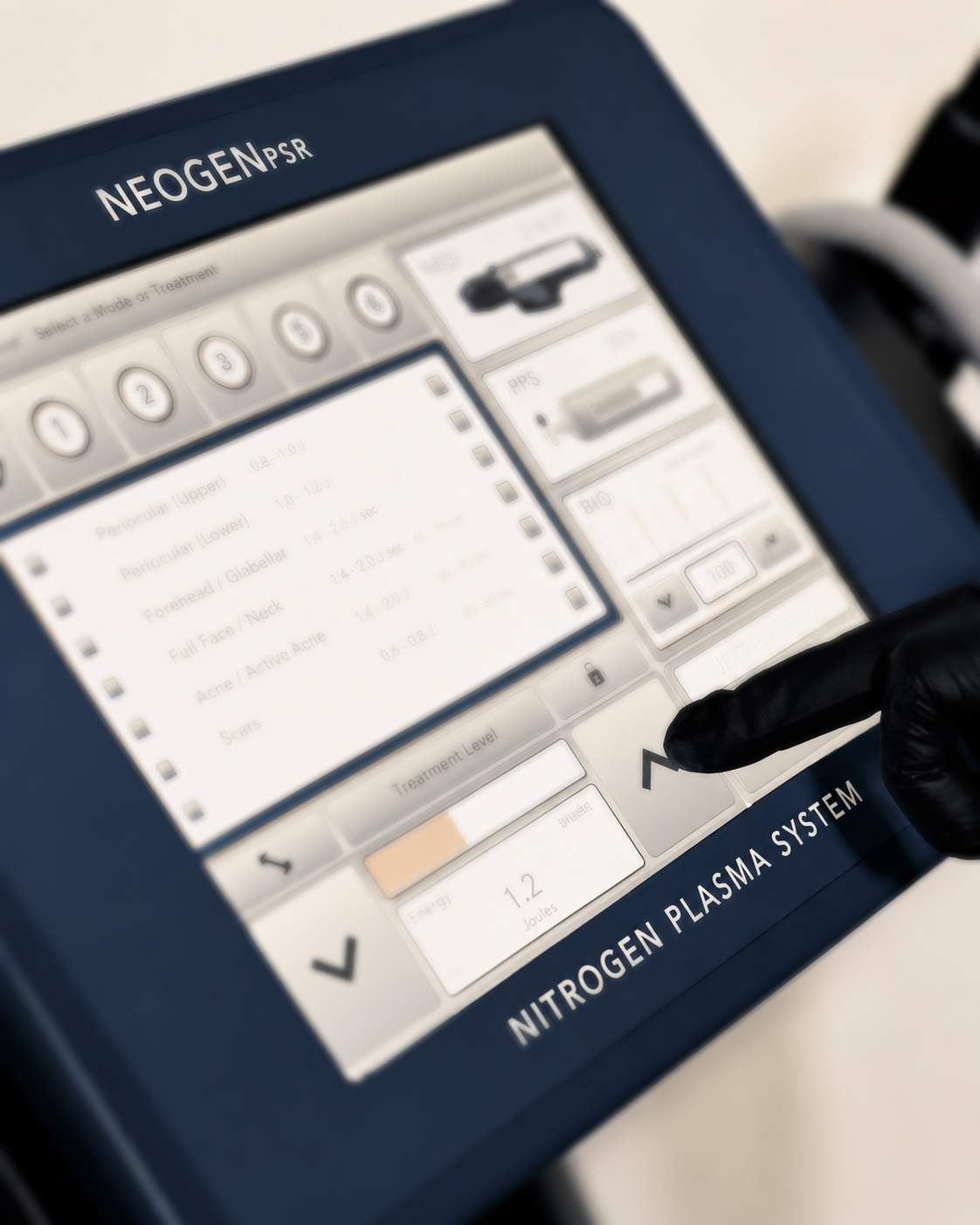
A C-section, mastectomy, or surgical scar doesn’t have to stay tight or rigid forever. Here’s what surgical scar treatment with Plexr and NeoGen can do in Calgary — and what they can’t.
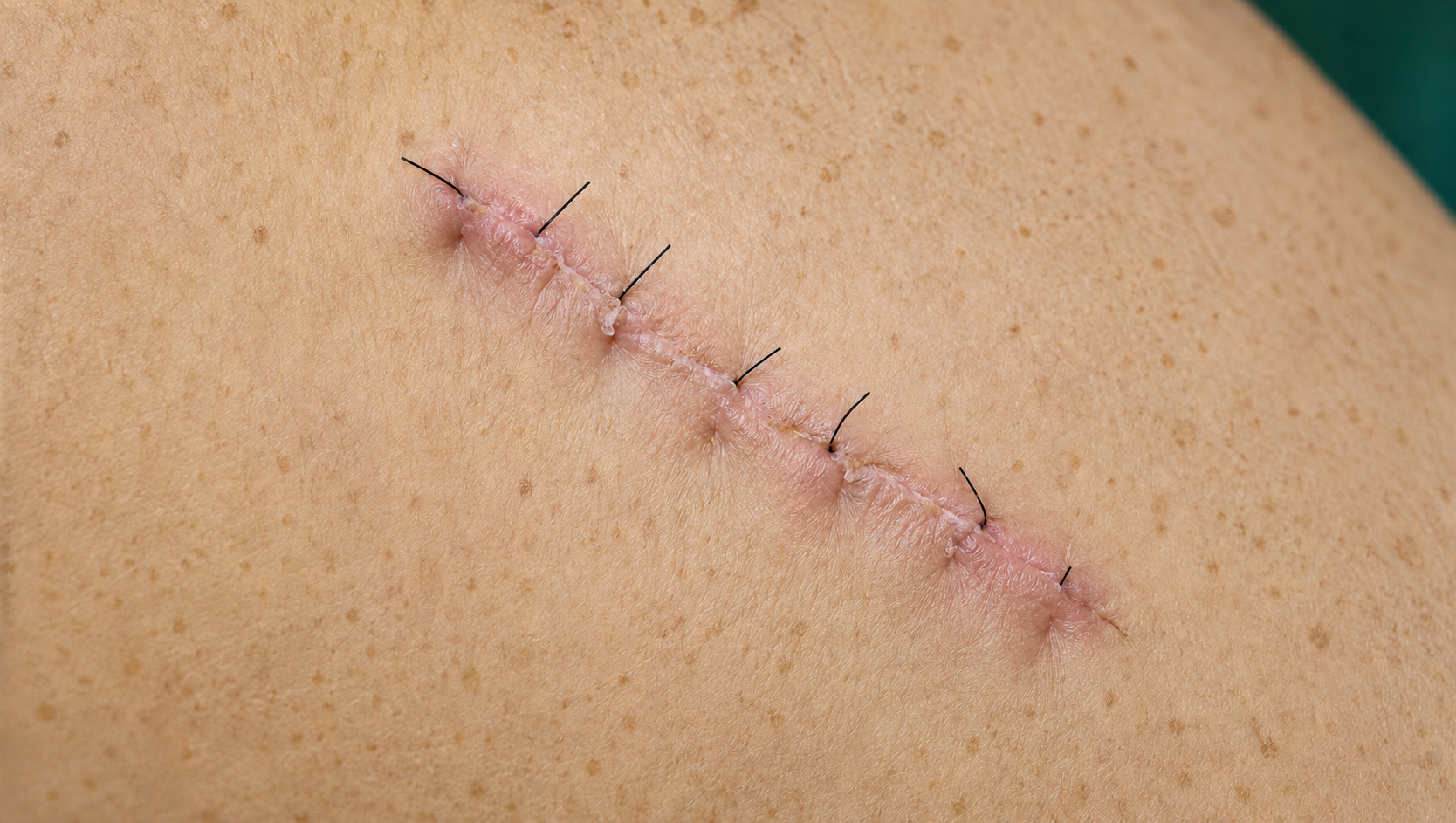
Beyond aesthetic concerns, Plexr and NeoGen can also be used to improve surgical scar tissue—but for most people, the goal isn’t to erase the scar.
Scars often represent something significant: the birth of a child, cancer treatment, a life-saving surgery, or another chapter that has become part of who someone is. Most clients aren’t looking to remove that story. What brings them in is something much more tangible: the scar feels tight, pulls with movement, catches on surrounding tissue, or simply doesn’t move the way the rest of their body does.
That restriction can be physical, but it often carries an emotional weight as well. When scar tissue limits how your body moves or feels, it can become a daily reminder of an experience you’ve already worked hard to move through.
This is where Plexr and NeoGen can play a role. Rather than trying to erase the scar itself, these treatments can help remodel dense scar tissue, improve pliability, and reduce restriction where appropriate. The goal isn’t to remove the evidence of what you’ve lived through—it’s to help the tissue function more comfortably and naturally.
Surgical scar treatment is one of the more common questions we receive from Calgary clients. Sometimes it’s a woman navigating long-term tightness after a C-section. Other times it’s someone years beyond a mastectomy or breast reconstruction who wonders whether anything can still be done to improve the feel and mobility of the scar tissue. In many cases, the answer is yes.
[IMAGE: Close-up of surgical scar tissue texture — caption: “Rigidity, texture mismatch, and color differences are among the most common scar concerns we see.”]
Why Surgical Scars Behave Differently Than the Skin Around Them
A surgical scar isn’t just discolored skin — it’s tissue that healed by laying down collagen quickly and in a rigid, dense pattern, rather than in the multi-directional, basket-weave way undamaged skin is built. That rigid, unidirectional structure is why a scar can end up feeling thick or looking bumpy, or in some cases form a slight dip rather than sitting flush with the surrounding skin.
It’s also why scar tissue can restrict mobility and reduce pliability — as it attaches to the structures beneath it, it can create a pulling, tugging, or internal tightness with movement that goes beyond how the surface looks. That’s why scars often feel tighter, flatter, or more rigid than the surrounding area, and why they can look different for years after the incision itself has closed. This process can also be affected by perimenopause and menopause specifically, since declining estrogen can slow the tissue healing response.
Full scar maturation can take up to a year or more, but treatment doesn’t need to wait that long — once the wound has fully closed and the initial healing is complete, the scar is generally in a good position to be treated, and can continue settling further with the help of that treatment rather than in spite of it
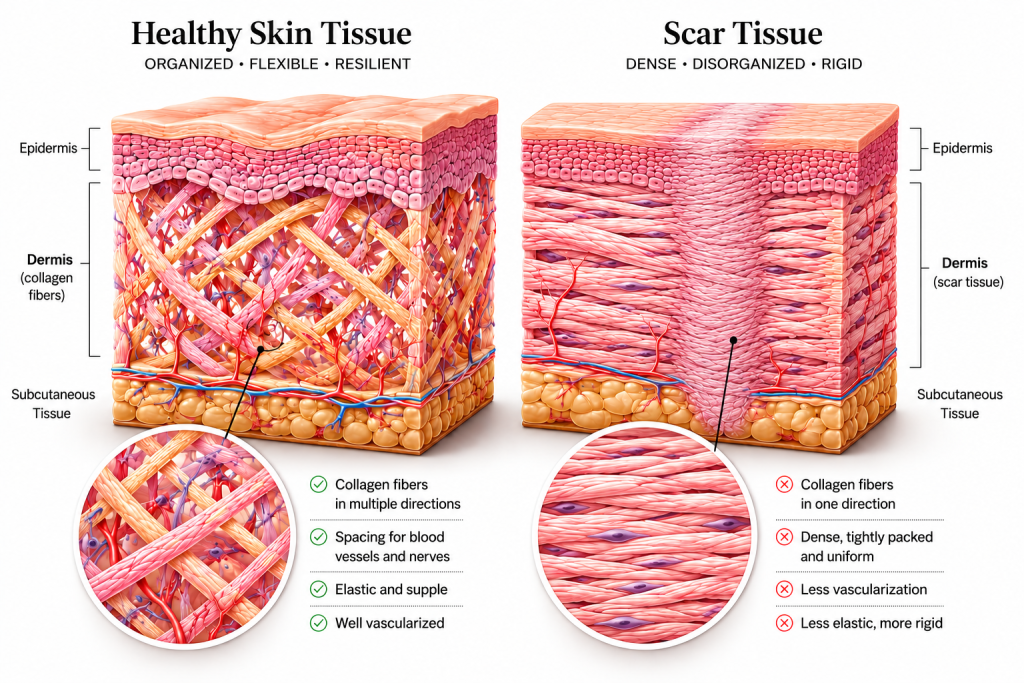
Scar tissue forms with collagen fibers packed densely and aligned in a single direction, rather than the flexible, multidirectional ‘basket-weave’ pattern of undamaged skin — making scars feel rigid rather than pliable.
Why This Often Gets Overlooked in Skin Conversations
Most aesthetic content focuses on facial aging, and most scar content focuses narrowly on acne. Surgical and life-event scars — a C-section line, a mastectomy scar, a scar from any procedure that mattered — rarely get their own conversation, even though the emotional weight they carry is often far greater. In practice, these are often some of the most meaningful conversations that happen in the treatment room.
How Plexr and NeoGen Actually Work on Scar Tissue
Both Plexr and NeoGen work by creating a controlled healing response that encourages the body to remodel collagen within the treated tissue. While they do this in different ways, the goal is similar: to improve the quality, flexibility, and overall structure of the scar, while also treating the surface appearance.
Researchers have been able to observe this remodeling under confocal microscopy, where plasma treatment has been shown to reorganize existing collagen into longer, more orderly fibers—a visible sign that meaningful tissue remodeling is taking place rather than simply creating temporary cosmetic change.
One advantage of NeoGen is that its energy can be adjusted to match the condition of the tissue being treated. This allows previously injured or more delicate skin to be treated more conservatively while still encouraging gradual remodeling, making it a useful option for many surgical scars.
The research on plasma technologies for scar treatment is still evolving. Most published studies have been relatively small, but the results are encouraging. In one study of 20 patients with traumatic scars, nearly half experienced greater than 50% improvement after three monthly treatments, with temporary hyperpigmentation being the primary reported side effect. The same study also found that deeper scars were less responsive, highlighting an important reality: not every scar can be dramatically improved, and treatment expectations should always be individualized.
The type of scar also matters. Facial scars often respond differently than scars on the body, and surgical scars each have their own characteristics depending on the procedure, location, age of the scar, and how the individual healed. For most surgical scars, the goal is meaningful improvement—softening dense tissue, improving texture and colour, increasing pliability, and reducing restriction where present. Complete disappearance of a scar, however, is generally not a realistic expectation.
Q&A: Does this actually work on surgical scars?
The short version: yes — plasma-based collagen remodeling is well-documented, though most of the strongest results come from other scar types like acne and post-traumatic scars. The surgical-scar-specific research is smaller and more preliminary, with the best outcomes seen in scars that aren’t especially deep.
What This Can Help With
- Rigid or tight-feeling scar texture — softening scar tissue and improving pliability at the skin’s surface
- Flattened or slightly raised scar surface irregularities
- Color mismatch between scar tissue and surrounding skin
- Scars from C-sections, mastectomies, and other surgical procedures
- Fully healed scars, generally from about 6–8 weeks after surgery onward
[IMAGE: Before and after comparison of scar texture following treatment — caption: “Improvement in scar rigidity and texture is possible without erasing the scar itself.”]
What This Can't Help With
Keloid scarring, actively raised or still-changing scars, and scars that haven’t fully closed and healed yet generally aren’t good candidates. Keloids in particular can be aggravated by additional skin injury — a peer-reviewed trial on NeoGen specifically excluded volunteers with a tendency toward keloid formation from participating, and the same caution generally applies to Plexr as an energy-based treatment. Deep or thick scars, generally those thicker than about 4mm or scars that have contracted significantly, also tend to respond poorly to plasma-based treatment, and scars on the eyelid specifically need extra caution given how thin that skin is and its proximity to the eye. A scar showing any signs of ongoing irritation, or one connected to an area with impaired sensation or circulation, needs a proper in-person assessment before any treatment plan is discussed.
Q&A: Does scar age matter?
Not as much as you’d think. What matters is whether the wound has fully healed, not the calendar — most scars don’t need to wait a full year before treatment.
What Treatment Looks Like
- Consultation and assessment — the scar’s age, depth, and history are reviewed in detail, including how it originally healed, before anything is recommended.
- Treatment — energy is applied directly to the scar tissue, based on an individual assessment of the area.
- Healing phase — the treated area goes through its own short recovery window, separate from the original surgical healing.
- Gradual collagen remodeling — new collagen continues developing at the site over the following months, which is where the real textural change comes from.
Healing Timeline
Healing looks a little different depending on which treatment is used. With Plexr, small carbon crusts form over the treated area and typically remain in place for 7 to 10 days, protecting the skin while it regenerates underneath. With NeoGen, the outer layer of skin stays intact, so healing looks more like redness followed by peeling as the skin renews from within, generally over a similar overall window. Either way, ongoing collagen remodeling continues well beyond the visible healing period, with texture continuing to soften over the following months.
[IMAGE: Day-by-day healing progression of treated scar tissue — caption: “A typical healing progression following scar treatment.”]
Q&A: Is downtime different for a scar versus facial skin?
Not meaningfully — expect a similar healing window either way. Our Recovery Guide has the full day-by-day breakdown for both treatments.
Who This Is For
If you’ve searched anything like “surgical scar treatment,” “c-section scar treatment,” or “mastectomy scar treatment,” this treatment option may resonate with you. If you’re also weighing safety questions generally, our Is Plexr Safe? piece covers the research and recovery data in more depth.
- You have a C-section, mastectomy, or other surgical scar that’s fully healed
- The scar feels tight, rigid, or textured differently than the skin around it
- You’ve noticed color or texture mismatch that hasn’t faded with time
- You’re not looking for scar removal, but genuine improvement in comfort and appearance
[IMAGE: Client consultation discussing scar concerns — caption: “Every treatment plan starts with an assessment of the scar’s history and the client’s specific goals.”]
Managing Expectations
Results with scar tissue develop both immediately and progressively, with visible softening continuing as new collagen forms over the following months. More than one session may be needed depending on the scar’s depth and history, and individual results vary considerably based on how the original tissue healed. Following an individualized aftercare plan matters even more here than with facial treatment, given the tissue’s history.
Frequently Asked Questions
Can Plexr or NeoGen remove a scar completely?
No. Both work by improving texture, color, and pliability, not by erasing scar tissue. A scar is permanent tissue change, and treatment works within that reality.
How soon after surgery can a scar be treated?
Generally once the wound has fully closed and healed — commonly somewhere between 6 to 8 weeks and 3 to 6 months after surgery, depending on the scar’s size and depth. Waiting a full year isn’t necessary for most scars.
Is this treatment safe for keloid-prone skin?
Not typically. Keloid scarring can be aggravated by additional skin injury, so this requires an honest in-person assessment before anything is recommended.
Where can I get surgical scar treatment in Calgary?
Gia Sena offers surgical scar treatment with Plexr and NeoGen in Calgary, with an initial consultation to assess the scar’s age, depth, and history before recommending a plan.
Sarah is a Registered Nurse and is the founder of Gia Sena | providing regenerative plasma aesthetics in Calgary. Her approach blends clinical expertise with a regenerative philosophy, supporting midlife skin through treatments that restore structure, resilience, and long-term skin health.
Sources: Kono, T., Groff, W.F., Sakurai, H. et al. (2009). Treatment of Traumatic Scars Using Plasma Skin Regeneration (PSR) System. Lasers in Surgery and Medicine. Rossi, E., Farnetani, F., Trakatelli, M., Ciardo, S., Pellacani, G. (2018). Clinical and Confocal Microscopy Study of Plasma Exeresis for Nonsurgical Blepharoplasty of the Upper Eyelid: A Pilot Study. Dermatologic Surgery. Wang, S., Mi, J., Li, Q., Jin, R., Dong, J. (2017). Fractional microplasma radiofrequency technology for non-hypertrophic post-burn scars in Asians: A prospective study of 95 patients. Lasers in Surgery and Medicine.
Book your Consultation
This is where we tailor it, for you.