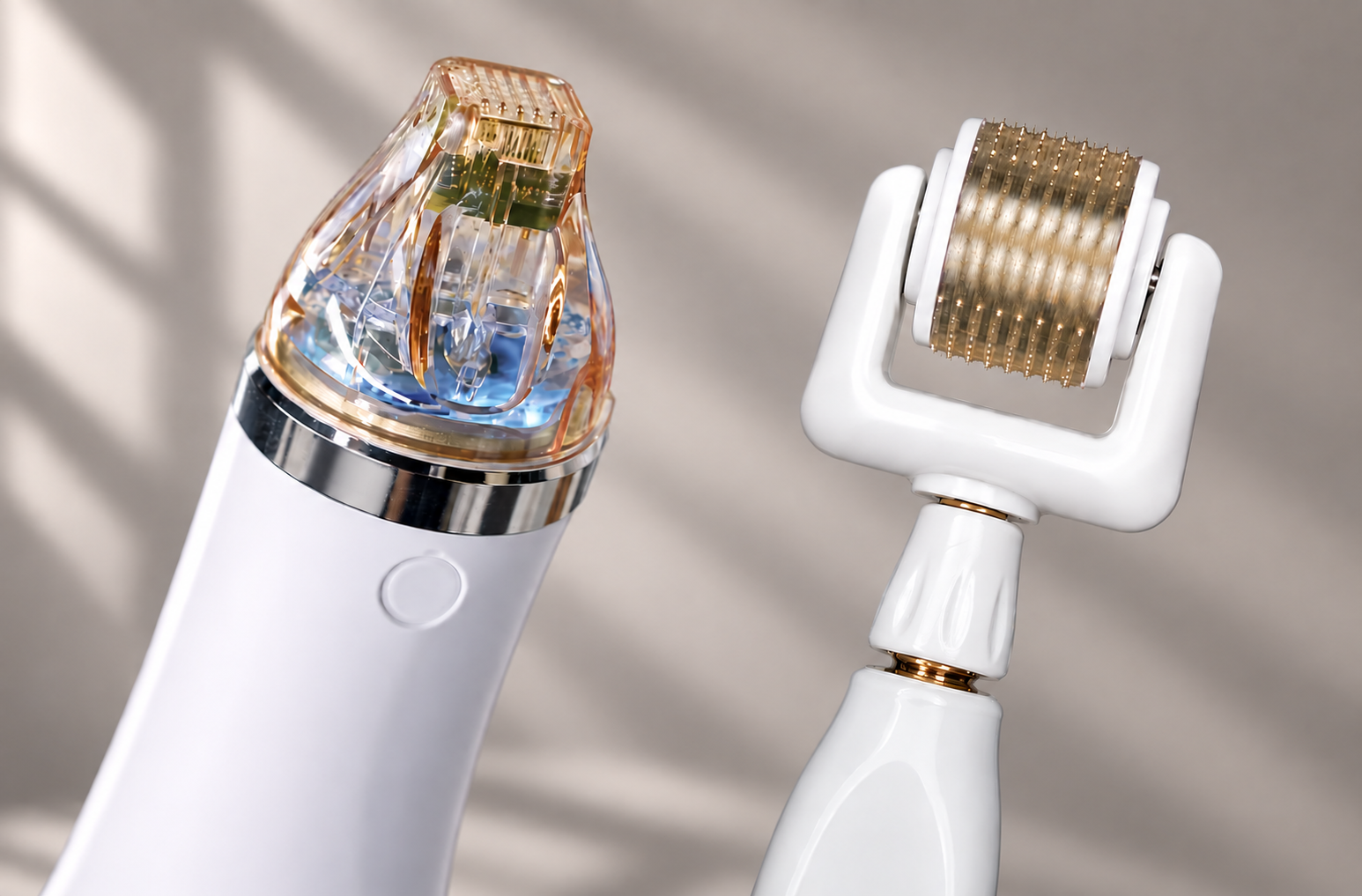
Adding energy to microneedling doesn’t mean more of the same treatment. It adds controlled heat alongside the mechanical injury, giving the skin a second signal for remodeling and tightening.
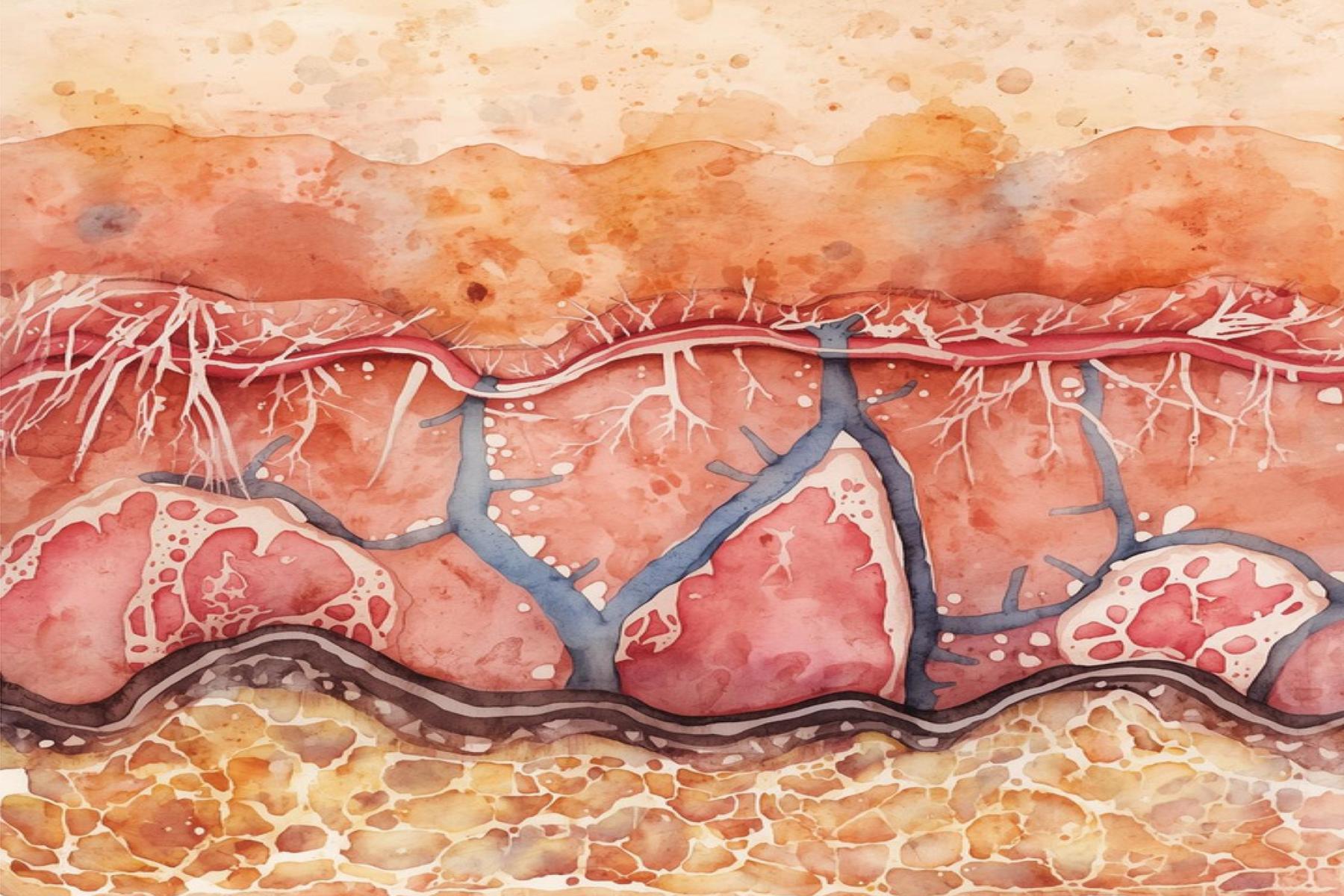
Quick Answer: Mechanical microneedling creates controlled mechanical injury. Energy microneedling adds controlled thermal injury alongside it. That thermal component amplifies the remodeling response and introduces tissue tightening that needles alone don’t produce, expanding what microneedling can address when laxity or more established structural change is part of the concern.
If you’ve looked into microneedling recently, you’ve likely come across the energy versions. RF microneedling shows up constantly in searches, often under device names like Morpheus8. Plasma versions like Plexr Lumen are newer to the conversation. Both get positioned as an upgrade, but “better” isn’t the right frame. Energy doesn’t replace what mechanical microneedling does. It adds to it.
The Foundation Doesn't Change
Every version of microneedling starts the same way. Fine needles create controlled micro-injury in the skin, and the body’s own healing response does the work: inflammation, then new collagen, then remodeling over the following weeks (Fernandes, 2005). In a retrospective study of 480 patients treated for fine wrinkles, lax skin, scarring, and stretch marks, mechanical microneedling alone produced measurable improvement, with histology showing increased collagen and elastin deposition at six months (Aust et al., 2008).
What Changes When Energy Gets Added
The energy creates a small, controlled zone of heat around each needle. That heat is a second kind of injury layered onto the mechanical one, and it does two things the needles alone don’t.
It amplifies the healing response. RF was added to microneedling specifically to strengthen the dermal wound-healing response (Shauly et al., 2023). In the treated tissue, those heated zones trigger new collagen and new elastin formation (Hantash et al., 2009), and biopsies of facial skin have shown increased collagen and elastin four months after a single treatment (Suh et al., 2023).
It tightens. Heat alters existing collagen structure, while the remodeling response that follows supports tissue contraction and tightening. A 2026 systematic review of 41 studies found RF microneedling improves skin tightening and rejuvenation beyond what conventional microneedling achieves (Kumar et al., 2026).
How the heat is produced depends on the energy source. With RF microneedling, current travels through the needle electrodes and tissue resistance converts it into heat around each needle tip. With Plexr Lumen, Plexr plasma energy is delivered directly through the micro-needles as they create their channels (GMV Medical Innovation, Plexr Lumen brochure), and GMV’s training materials describe that thermal energy as working within the epidermis and upper dermis rather than being delivered into deeper tissue (GMV Medical Innovation, Plexr Lumen webinar, 2025). The comparative tightening evidence above comes from RF studies; Lumen-specific clinical studies haven’t been published yet.
Clinically, that makes energy microneedling worth considering when mechanical-only treatment is no longer addressing the concern, particularly when laxity has become part of the picture rather than texture alone.
Six Ways Energy Changes What Microneedling Can Do
Heat adds what deeper needles can't
A longer needle still produces the same mechanical injury, only further down. Heat adds a different signal to the skin in the same session, which is why energy versions are often considered when mechanical-only microneedling is no longer addressing the concern.
More reach into laxity
Tightening is where energy microneedling most clearly separates from the mechanical-only version (Kumar et al., 2026). On the plasma side, Plexr plasma energy has confocal microscopy evidence from upper-eyelid treatment showing tissue remodeling following plasma exeresis (Rossi et al., 2018). Plexr Lumen uses Plexr plasma technology delivered through its microneedling attachment, although Lumen-specific clinical studies haven’t yet been published.
Depth matched to where the concern sits
RF devices deliver thermal energy at the needle tips at a chosen depth, allowing treatment at different levels of the dermis. Plexr Lumen delivers its thermal energy through the micro-needles within the epidermis and dermis. The difference isn’t simply one of stronger versus weaker — it’s where and how that thermal energy is delivered.
More options for acne scars and established texture
This is one place the added energy can make a difference, though results vary by scar type. Mechanical microneedling alone has evidence for scarring (Aust et al., 2008). A 2025 systematic review of 16 studies involving 481 patients found fractional RF microneedling likely effective as a standalone treatment for facial acne scarring (Niaz et al., 2025). According to GMV, the manufacturer, Plexr Lumen is designed for superficial scars and post-inflammatory texture; this has not yet been studied independently. If you’re looking into microneedling for acne scars in Calgary, scar type and depth matter when deciding which approach makes the most sense.
Treatment parameters can change with the concern
Needle depth and energy settings can be adjusted rather than treating every concern the same way. A superficial texture concern doesn’t necessarily call for the same treatment parameters as a deeper structural concern. That matters for skin that keeps changing through perimenopause and menopause, when laxity may become more prominent alongside texture concerns.
A next step that doesn't discard what already worked
For someone whose mechanical microneedling results have plateaued, energy adds a layer onto a foundation they already know, rather than requiring a completely different treatment category.
Why This Tends to Matter More in Midlife
As estrogen declines, skin gradually loses some of the collagen, elastin, and fibroblast activity that help maintain its structure (Lephart & Naftolin, 2021). That’s often when laxity starts showing up alongside texture and fine lines, which is the territory where the added energy has more to work with than mechanical injury alone.
Energy Isn't a Universal Upgrade
None of this makes energy microneedling the automatic right choice. Mechanical-only microneedling is still a strong fit for plenty of people, especially with sensitive or reactive skin, a mild main concern like texture rather than laxity, or a preference to see how skin responds before adding anything else. The better question isn’t which version is stronger. It’s which one matches where your skin is now.
We go deeper into how RF and plasma compare here: RF Microneedling vs. Plexr Lumen, and how plasma energy compares to the mechanical-only approach here: Traditional Microneedling vs. Plexr Lumen
Frequently Asked Questions
Does energy microneedling work better than regular microneedling?
For tightening and laxity, the RF evidence points that way: a 2026 systematic review found RF microneedling improves skin tightening beyond conventional microneedling (Kumar et al., 2026). For mild texture concerns or sensitive skin, mechanical-only microneedling can still be the better starting point.
What's the difference between RF and plasma energy microneedling?
Both add a thermal stimulus through the needles, but they generate and deliver that energy differently. RF uses radiofrequency energy to heat tissue at selected needle depths. Plexr Lumen delivers plasma-generated thermal energy through the micro-needles within the epidermis and dermis. The full comparison is here.
Is energy microneedling worth it if I've already had regular microneedling?
That depends on whether mechanical microneedling is still addressing your concerns. If it has done what you wanted for texture, there may be no reason to add energy. If results have plateaued, or laxity and more established structural changes have become part of the picture, adding a thermal stimulus may offer a logical next step.
Sarah is a Registered Nurse and founder of Gia Sena, providing regenerative plasma aesthetics in Calgary. With over 23 years in nursing, her work focuses on supporting long-term skin vitality through regenerative treatments tailored to perimenopausal and menopausal skin.
Sources
- Fernandes D. Minimally invasive percutaneous collagen induction. Oral Maxillofac Surg Clin North Am. 2005;17(1):51–63.
- Aust MC, Fernandes D, Kolokythas P, Kaplan HM, Vogt PM. Percutaneous collagen induction therapy: an alternative treatment for scars, wrinkles, and skin laxity. Plast Reconstr Surg. 2008;121(4):1421–1429.
- Hantash BM, Ubeid AA, Chang H, Kafi R, Renton B. Bipolar fractional radiofrequency treatment induces neoelastogenesis and neocollagenesis. Lasers Surg Med. 2009;41(1):1–9.
- Kumar N, Kim HM, Nishikawa A, Heo CY, Wu WTL, et al. Effectiveness of radiofrequency microneedling in the treatment of dermatological conditions: a systematic review. Aesthetic Plast Surg. 2026;50(13):5282–5317.
- Shauly O, Marxen T, Menon A, Gould DJ, Miller LB, Losken A. Radiofrequency microneedling: technology, devices, and indications in the modern plastic surgery practice. Aesthet Surg J Open Forum. 2023;5:ojad100.
- Suh DH, Cho M, Kim HS, Lee SJ, Song KY, Kim HS. Clinical and histological evaluation of microneedle fractional radiofrequency treatment on facial fine lines and skin laxity in Koreans. J Cosmet Dermatol. 2023;22(5):1507–1512.
- Niaz G, Ajeebi Y, Alshamrani HM, Khalmurad M, Lee K. Fractional radiofrequency microneedling as a monotherapy in acne scar management: a systematic review of current evidence. Clin Cosmet Investig Dermatol. 2025;18.
- Rossi E, Farnetani F, Trakatelli M, Ciardo S, Pellacani G. Clinical and confocal microscopy study of plasma exeresis for nonsurgical blepharoplasty of the upper eyelid: a pilot study. Dermatol Surg. 2018;44(2).
- Lephart ED, Naftolin F. Menopause and the skin: old favorites and new innovations in cosmeceuticals for estrogen-deficient skin. Dermatol Ther (Heidelb). 2021;11(1):53–69.
- GMV Medical Innovation. Plexr Lumen brochure; Plexr Lumen webinar presentation (November 2025).
Book your Consultation
This is where we tailor it, for you.