One semi-ablative Plexr treatment to the upper and lower eyelids, photographed at Day 13. What healing looked like, what the client noticed, and what happens next.
This 50-year-old client came in to address skin laxity around her eyes. These Plexr before and after images show her response following one semi-ablative treatment to the upper and lower eyelids, photographed at Day 13. You may also see this type of plasma treatment referred to as fibroblast treatment.
Video of Plexr upper and lower eyelid treatment before and 13 days after one semi-ablative session.
What Day 13 looks like
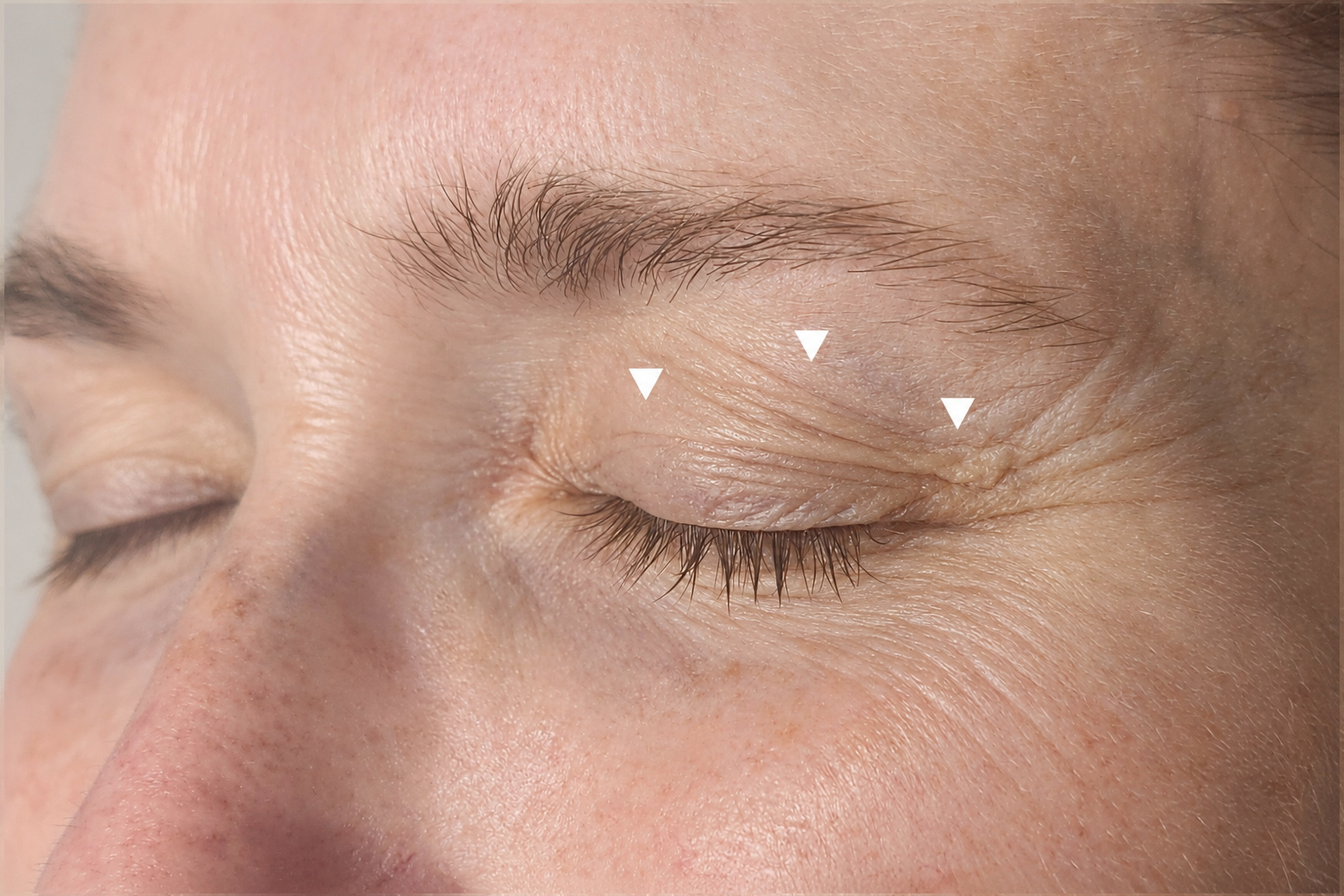
The carbon crusts — the small protective crusts that form where the plasma is applied (shown below) — had come off by Day 10. At Day 13, there is still some pinkness in the treated areas. This is part of the normal healing process, and she is using her post-treatment products while the skin settles and the tissue heals.
Most clients plan for 7 to 10 days of visible downtime after Plexr eyelid treatment. My day-by-day healing guide shows what that process typically looks like from treatment day onward.
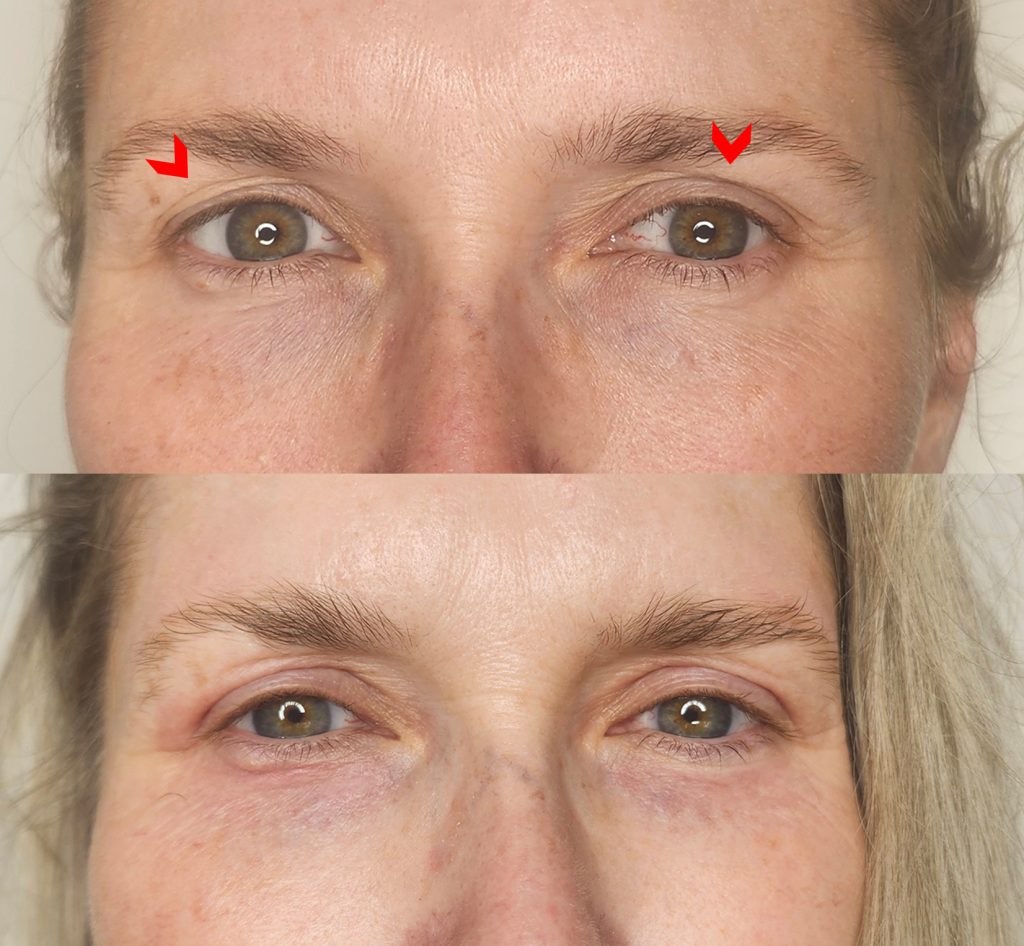
Before and Day 13 after one Plexr treatment to the upper and lower eyelids.
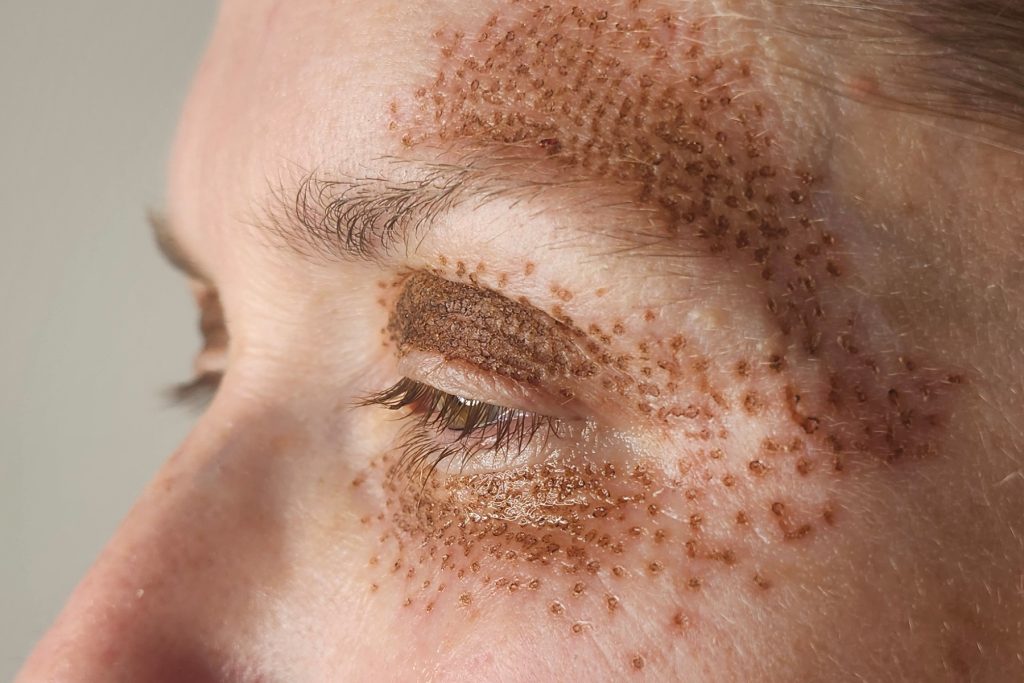
Healing view: Carbon crusting across the upper and lower eyelids and lateral brow area, showing the treatment pattern used to address both eyelid laxity and the brow area contributing to the hooding. The crusts fall away naturally as the skin heals.
What changed in the upper and lower eyelids
The improvement in laxity is already visible in both the upper and lower eyelids. In the upper eyelids, I estimate approximately 40 to 50 percent improvement in laxity from this first treatment.
I also treated above the outer brow as part of her upper eye treatment. Hooding isn’t always just excess eyelid skin — brow descent can contribute to how much skin sits over the upper lid. Treating the lateral brow area can help support the overall lift when both laxity and brow position are contributing. I go into this in more detail in my Plexr for hooded eyelids blog, including how brow position can affect what we see as hooding.
In practice, we generally see roughly 30 percent improvement per treatment, so her result was above what we would typically expect from a single session. This is one client’s result, of course, and results vary depending on the degree of laxity and how each person’s tissue responds.
You can also see additional cases on the Plexr results page.
At the follow-up appointment, this client reported she was happy with the immediate results and noticed a significant change in the heaviness of her eyelids. Her teenage daughter also took notice and complimented her — that alone could justify the cost of admission. 😉
This client also experiences blepharitis. Before treatment, the excess upper eyelid skin rested heavily along her lash line. With less skin now sitting against that area, she is hopeful there may also be a change in the redness and inflammation she typically experiences. To be clear, Plexr is not being used as a treatment for her blepharitis, but it is something we are both interested in observing as her eyelids heal and her results develop.
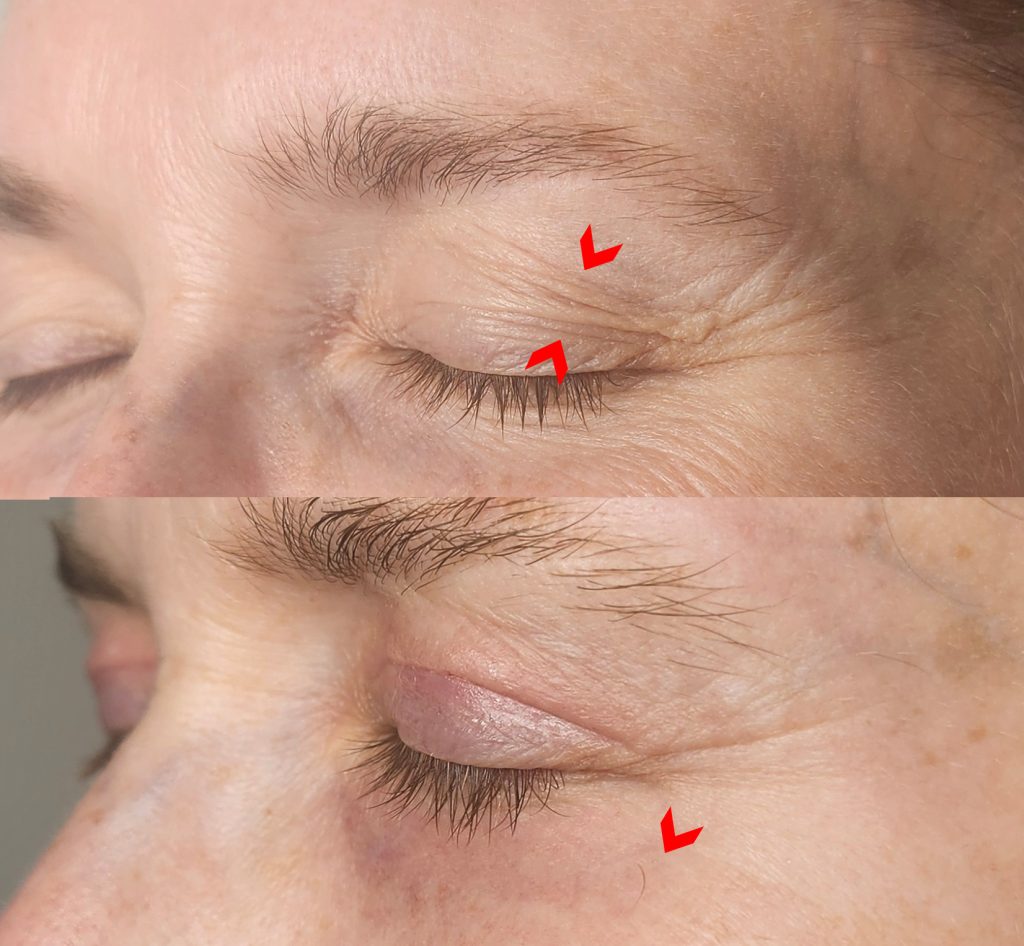
Before and Day 13, showing the initial change in upper and lower eyelid laxity.
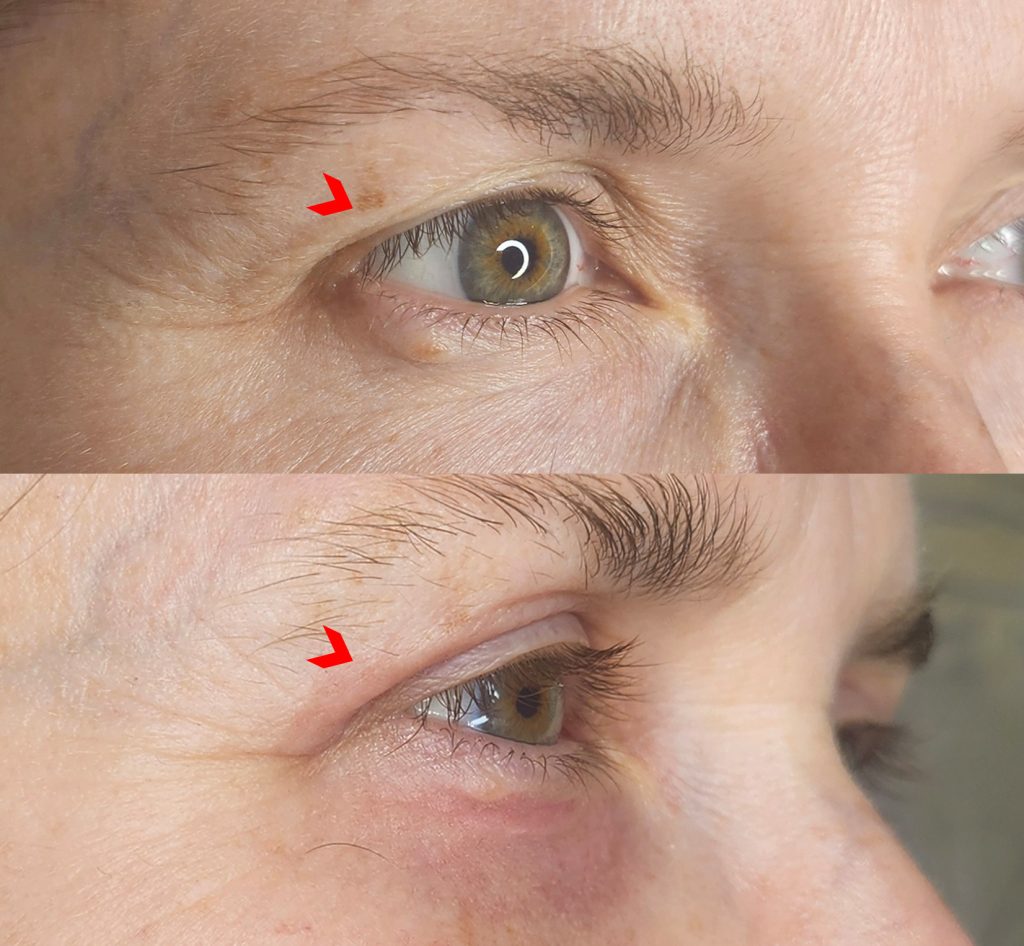
Before and Day 13 after one Plexr eyelid treatment, with some post-treatment pinkness still visible as the skin heals.
Why the eye area shows change early
The skin around the eyes is the thinnest on the face, with less oil production and less underlying structural support. As estrogen declines through perimenopause and menopause, changes in collagen and skin structure become more noticeable, and the eye area is often one of the first places we see it.
The Eye Lift Calgary page explains the difference between hooding, skin laxity and under-eye bags, while the loose under-eye skin blog goes further into changes specific to the lower lid.
What happens next
Day 13 is still very early — this is not the finished result.
The remaining pinkness will subside, and we expect further contraction and tightening as the tissue heals and remodels over the coming weeks. What you see when the crusts come off is not necessarily where the result stops.
Plexr eyelid rejuvenation can take more than one treatment depending on the amount of laxity and individual tissue response. Given the improvement from this first session, she will return in approximately eight weeks for a light touch-up rather than another full treatment.
My Personal Thoughts
I love being able to do this treatment. It is the kind of work I could — and pretty much do — happily spend all day doing. There is something very rewarding about seeing a change like this and then hearing what that change feels like to the person in front of me.
A big thank you to all of my clients who trust me with their faces, their skin and the process. I don’t take that trust lightly.
Common Questions
How long is the downtime after Plexr eyelid treatment?
Most clients plan for 7 to 10 days of visible downtime. Swelling develops during the first few days and typically peaks around Day 2 or 3. The carbon crusts then flake away naturally, usually within 7 to 10 days. Some pinkness can remain after the crusts are gone, as you can see with this client at Day 13.
Does Plexr eyelid treatment hurt, and is recovery painful?
Topical numbing is applied before treatment, and Plexr is generally well tolerated. During the first few days of healing, swelling and tenderness can cause some mild discomfort, but the recovery is not typically described as painful.
How much does Plexr eyelid treatment cost?
Plexr eyelid treatment is $900 for upper or lower eyelids, with packaged treatment options for the upper and lower eyelids quoted after consultation. The number of sessions depends on how much laxity there is to work with and the treatment plan we decide on together. Current pricing is also available on the FAQ page.
Sarah is a Registered Nurse and founder of Gia Sena, providing regenerative plasma aesthetics in Calgary. With over 23 years in nursing, her work focuses on supporting long-term skin vitality through regenerative treatments tailored to perimenopausal and menopausal skin.
Book your Consultation
This is where we tailor it, for you.