Considering Plexr for hooded eyelids? Here’s what treatment, healing and results look like — including downtime, number of sessions and who it’s best suited for.
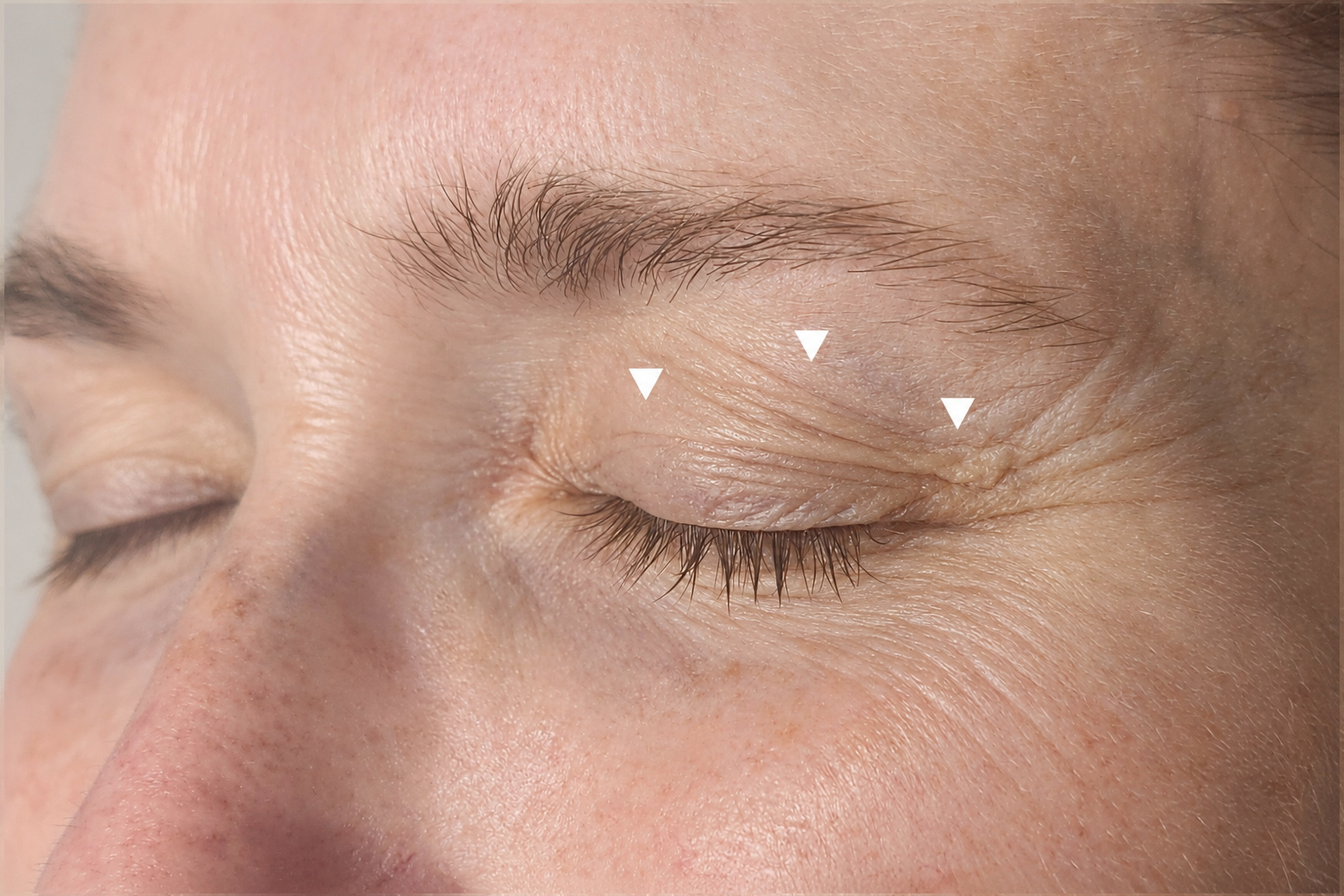
Clients rarely come in saying “I have dermatochalasis.” They say their eyes look tired even when they’re not; that their eyelids physically feel heavy — like the skin is weighing down on their eyes. Or they notice the skin above their eyelid has started resting lower than it used to, sometimes right on the lash line. It’s one of the reasons people come to me looking for Plexr for hooded eyelids in Calgary.
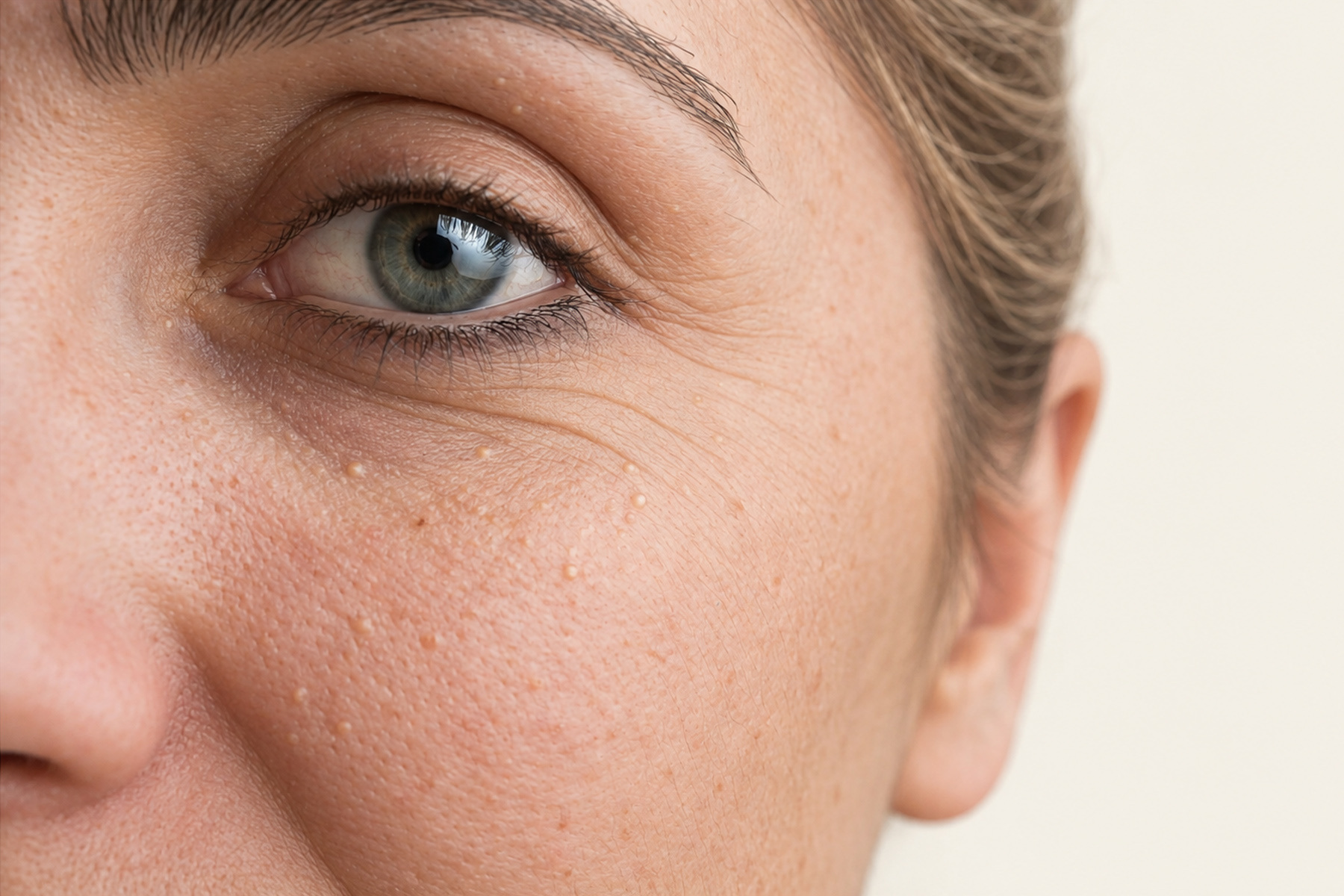
As that lax skin settles lower over the eyelid, it creates the hooded appearance. It’s often one of the earlier places age- and hormone-related changes become visible, for a straightforward reason: the skin around the eyes is the thinnest on the face, with less oil production and less scaffolding underneath it to begin with. When collagen and elastin decline elsewhere on the face, this area tends to show it earlier and more visibly.
What Causes Hooded Eyelids?
Hooding is typically a combination of two things: loosening upper eyelid skin (dermatochalasis) and some degree of brow descent, rather than one single cause — which is part of why it looks different from person to person even when the underlying changes are similar.
Collagen production slows through perimenopause and menopause, as declining estrogen speeds up the same collagen and elastin loss that’s already underway with age.
Upper eyelid laxity — the loose, mobile skin that can contribute to hooding.
What Plexr Does
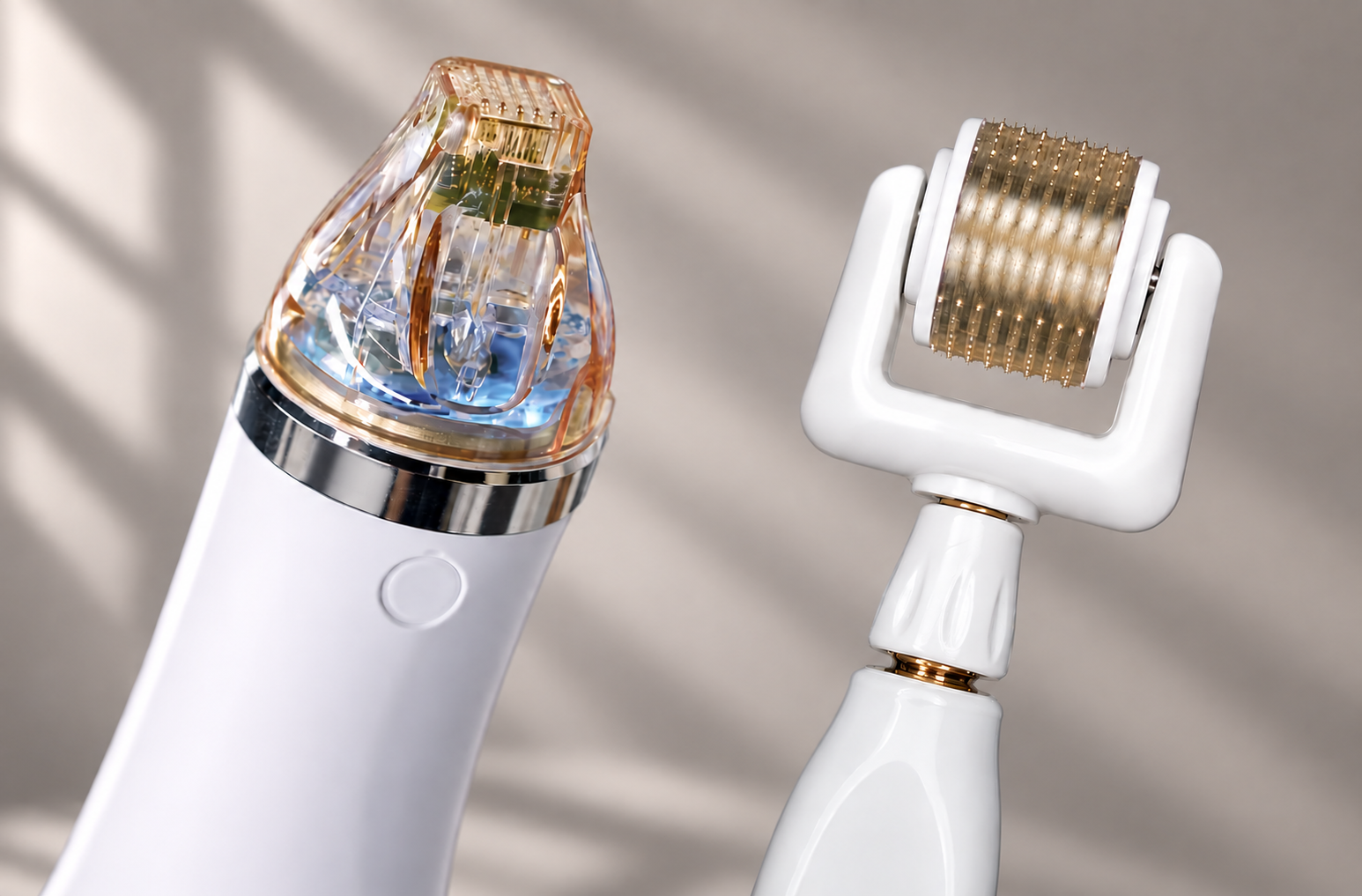
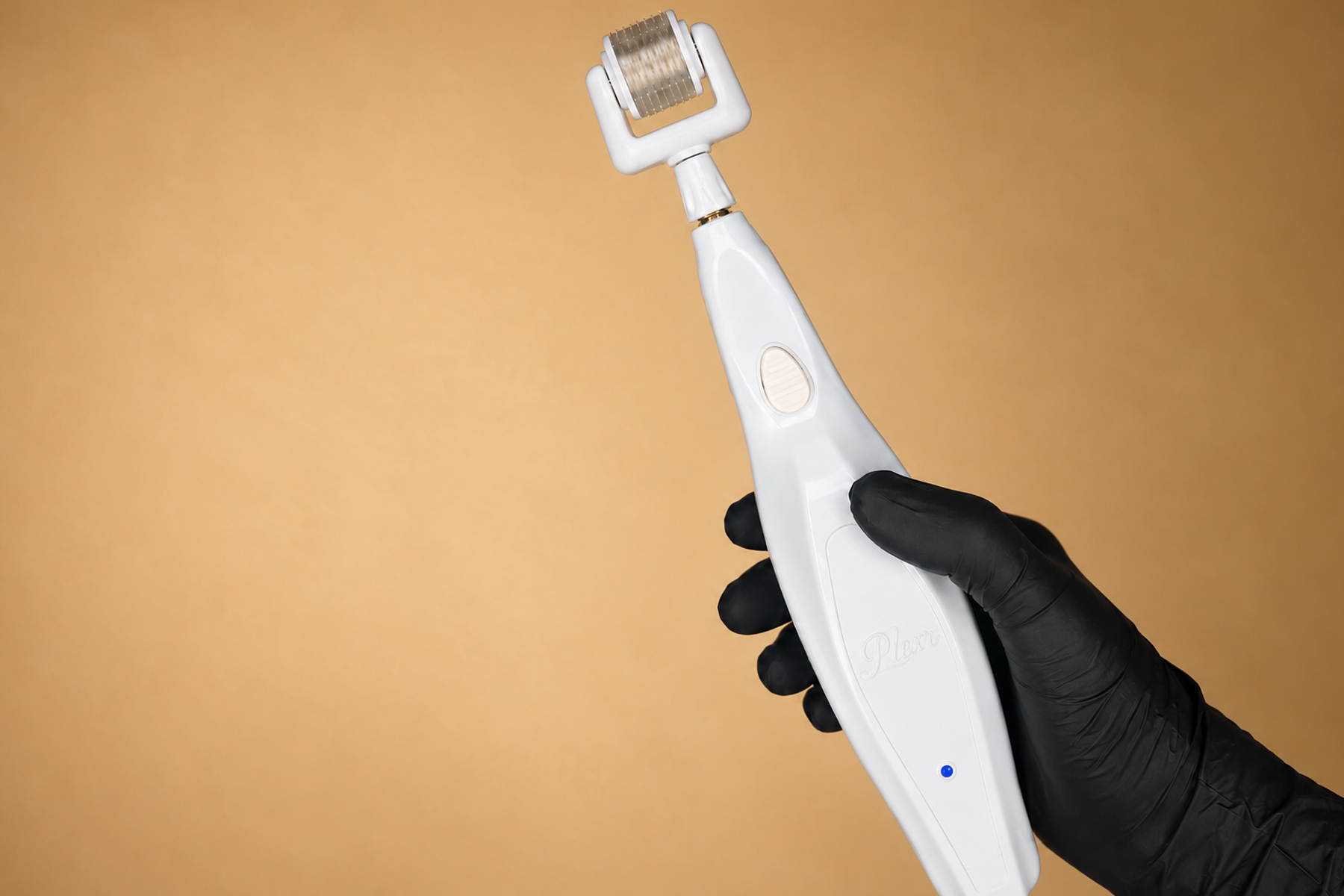
Plexr works through plasma sublimation: a controlled plasma arc delivered just above the skin’s surface, converting the outermost layer directly to a gas. There is no blade or incision. Two things happen at once — the surrounding tissue contracts immediately as the excess is removed, and the deeper layers respond with increased collagen and elastin production as the area heals.
It can be used on both the upper and lower eyelid without internal eye shields — something many other energy-based technologies require.
Plexr eyelid treatment is most commonly used for:
- UPPER EYELID HOODING where removing and tightening the excess skin can create a more open, defined look to the lid
- LOWER EYELID LAXITY AND CREPEY TEXTURE
- LOCALIZED EXCESS SKIN where lax skin has settled or folded
- FINE LINES, DEEPER WRINKLES AND TEXTURE in the surrounding eye area
Surgical blepharoplasty remains the right answer for excess skin severe enough to obstruct sight — it removes a larger volume of tissue through incision, which is a different scale of correction than Plexr is built for. True ptosis is a separate issue: it’s a weakness in the muscle that lifts the lid, not excess skin, and it’s corrected with a ptosis-specific surgical repair rather than blepharoplasty. Plexr works through contraction and collagen regeneration instead, offering a non-surgical blepharoplasty alternative for appropriate cases of mild-to-moderate hooding. “Non-surgical” doesn’t mean nothing is removed. It means there’s no cutting — sublimation still converts and removes the outer skin layer, it just does it without a blade.
Plexr tends to make the most sense when hooding is coming primarily from skin laxity rather than significant fat prolapse or true ptosis. Once fat prolapse is the main driver, surgical correction tends to outperform any plasma-based approach. Higher Fitzpatrick skin types carry an elevated pigmentation risk with energy-based treatments, so this is assessed individually before treatment.
What Treatment and Healing Look Like
The skin is cleansed and a topical numbing cream is applied, then removed before treatment begins, so the plasma is delivered to clean skin. It’s generally a well-tolerated procedure.
Small carbon crusts form immediately with the sublimation, and swelling develops in the hours after treatment. The crusts form a protective layer while the skin underneath repairs itself. The general timeline:
- DAYS 1–3: Swelling develops and typically peaks around day two or three, especially for upper eyelid treatments. Crusts are visible.
- DAYS 3–7: Swelling starts to subside. Crusts stay in place and shouldn’t be disturbed.
- DAYS 7–10: Crusts begin to flake away on their own. The new skin underneath is fresh and needs sun protection.
Most clients plan for 7 to 10 days of visible social downtime. See the full day-by-day healing guide for Plexr here
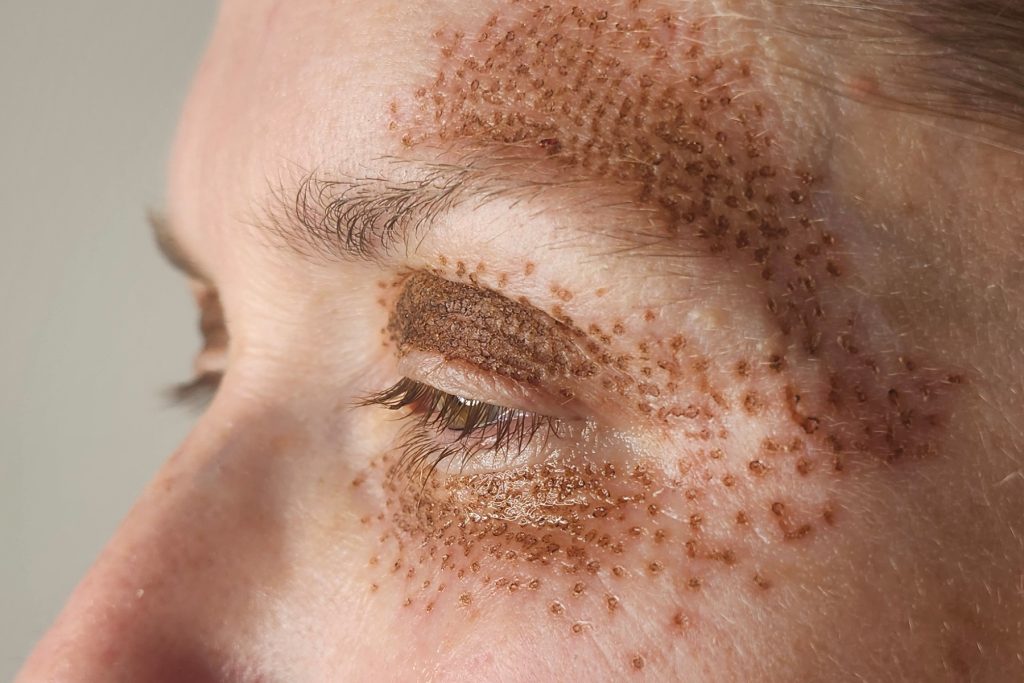
Immediately after Plexr upper and lower eyelid treatment.
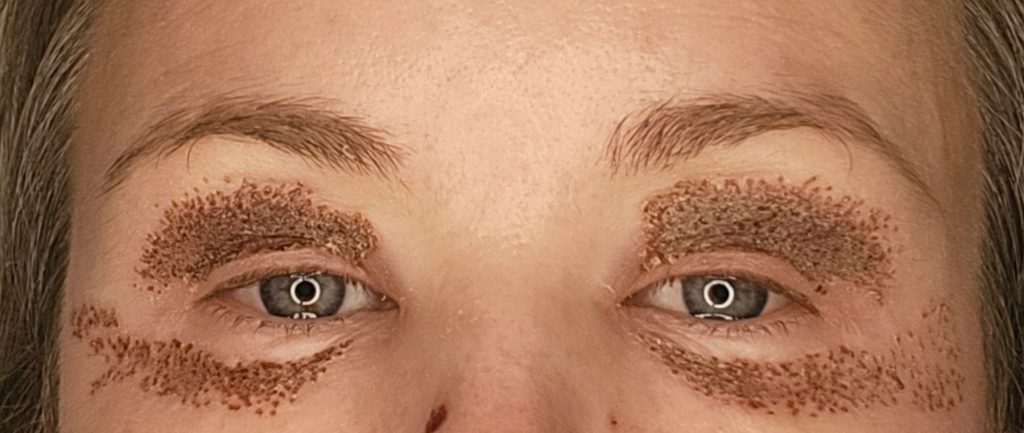
Day 3 after Plexr upper and lower eyelid treatment.
Results and Timeline
The initial tightening happens immediately, although swelling and crusting can make it harder to see at first. Once the crusts come off, the result becomes much easier to see, with collagen continuing to develop and remodel over the following few months.
In practice, we generally see roughly 30% improvement in laxity per treatment. For upper eyelids, where the skin is thicker, a course of 1 to 3 treatments can address the majority of excess tissue for most clients. The lower eyelids often need less — many clients get the result they’re looking for after 1 or 2 treatments.
Common Questions
Can a droopy eyelid be fixed without surgery?
Depends on the cause. If it’s dermatochalasis (skin), Plexr can genuinely help. If it’s true ptosis — a weakness in the muscle that lifts the lid — that needs a ptosis-specific surgical repair, not standard blepharoplasty, which corrects excess skin rather than the underlying muscle.
Is Plexr safe around the eyes?
Yes. It’s designed for delicate areas including the upper and lower eyelid, and doesn’t require internal eye shields the way many other technologies do. Full safety breakdown here.
How is this different from what's on the Eye Lift page?
Our Eye Lift Calgary guide covers diagnosis — what hooding is, how to tell it apart from ptosis or eye bags. This piece is the treatment breakdown once you know hooding is what you’re dealing with.
My Personal Thoughts
I love this treatment. I’ve had it done, and it’s made a big difference for me. In practice, I’ve seen Plexr give some pretty great results for clients, including people who didn’t want surgery or simply couldn’t make the cost and recovery involved with surgery work for them. I like that Plexr is a very effective alternative for so many.
What makes it worthwhile for me is hearing someone say, “My eyelids don’t feel as heavy anymore,” or “My eyes feel more open.” Those might sound like small things, but when someone has been bothered by that heaviness or laxity for years, the change in how their eyes look and feel can be pretty significant.
There is downtime with this treatment, and I want people to understand that going in. My goal is to make sure you know what the healing process looks like, feel prepared for it, and give yourself the time you need to heal. It’s a process — but the results I’m seeing make that process very worthwhile.
Sarah is a Registered Nurse and founder of Gia Sena, providing regenerative plasma aesthetics in Calgary. With over 23 years in nursing, her work focuses on supporting long-term skin vitality through regenerative treatments tailored to perimenopausal and menopausal skin.
Book your Consultation
This is where we tailor it, for you.